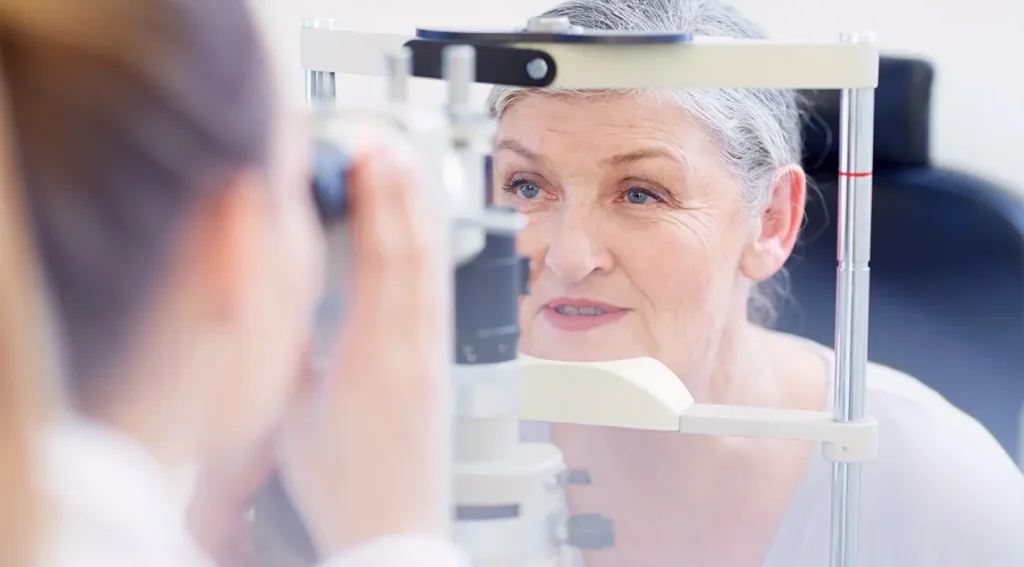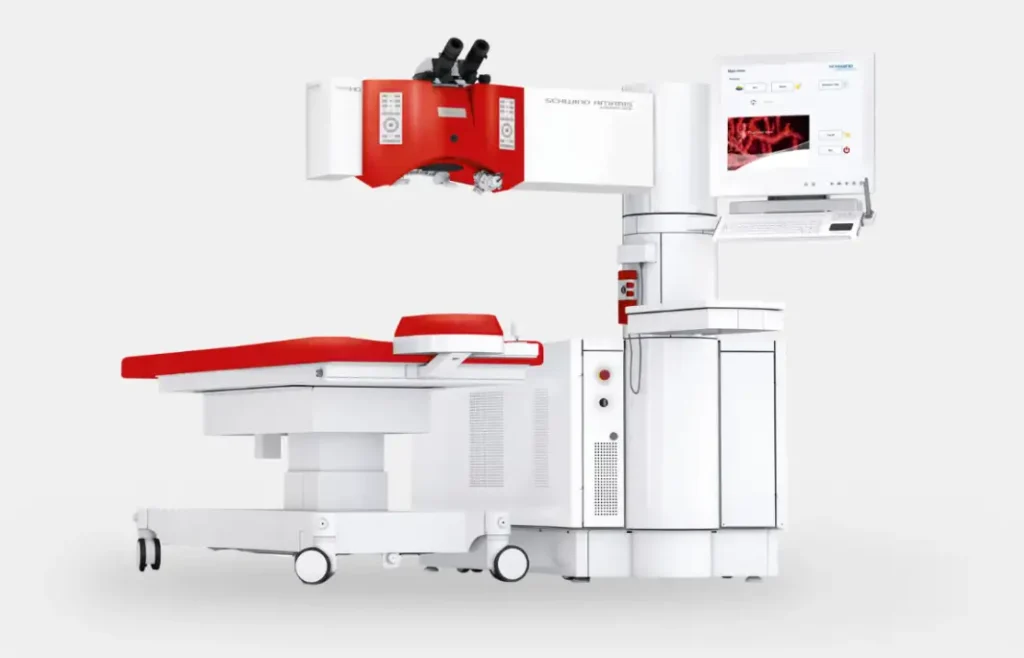
All-Laser LASIK & LASEK with SCHWIND AMARIS in Gangnam, Seoul are advanced refractive surgery procedures that reshape the cornea using high-speed excimer laser technology and intelligent eye tracking. These treatments correct myopia, hyperopia, and astigmatism while improving precision, safety, and visual recovery compared to earlier-generation laser systems.
BSM Eye Care Clinic in Gangnam
All-Laser LASIK and LASEK with the SCHWIND AMARIS in Gangnam, Seoul are advanced forms of laser vision correction that reshape the cornea using high-precision excimer laser technology. In All-Laser LASIK, a femtosecond laser creates a corneal flap before the Amaris laser reshapes the tissue. In LASEK, no flap is created—the surface epithelium is gently moved aside, and the Amaris laser corrects the refractive error. Both techniques aim to reduce or eliminate dependence on glasses or contact lenses by correcting myopia, hyperopia, and astigmatism with customized, topography-guided treatment.
For patients asking, “Is All-Laser LASIK or LASEK with Amaris safe and effective in 2026?” — when performed after thorough evaluation and by experienced refractive surgeons, both procedures are clinically established, highly precise, and associated with strong visual outcomes and high patient satisfaction.
Table of Contents

Understanding Refractive Errors: Why Vision Becomes Blurry
Clear vision depends on the cornea and lens bending (refracting) light accurately onto the retina. When this focusing system is imperfect:
- Myopia (nearsightedness) – light focuses in front of the retina
- Hyperopia (farsightedness) – light focuses behind the retina
- Astigmatism – irregular corneal curvature causes distorted focus
Laser refractive surgery reshapes the cornea to correct how light enters the eye. The key difference in 2026 is not whether lasers are used—but how precisely and safely the corneal tissue is modified.
What Makes “All-Laser” Different?
Traditional LASIK used a mechanical microkeratome blade to create the corneal flap.
All-Laser LASIK replaces that blade with a femtosecond laser, increasing:
- Flap thickness predictability
- Structural uniformity
- Safety profile
The reshaping itself is performed using an excimer laser such as the SCHWIND AMARIS, which delivers highly controlled ultraviolet pulses to remove microscopic amounts of corneal tissue.
How the SCHWIND AMARIS Platform Enhances Precision
The Amaris system is known for:
1. High-Speed Laser Delivery
Fast pulse rates reduce treatment time and limit dehydration of corneal tissue.
2. Advanced Eye Tracking
6-dimensional eye tracking compensates for:
- Horizontal movement
- Vertical movement
- Rotational movement (cyclotorsion)
- Pupil centroid shift
This ensures the laser energy is delivered exactly where planned—even if the eye moves during treatment.
3. Topography-Guided & Wavefront-Optimized Treatments
Instead of applying a “standard” correction, modern refractive surgery can customize treatment based on:
- Corneal surface irregularities
- Optical aberrations
- Individual biomechanical characteristics
This personalization reduces higher-order aberrations that can cause glare, halos, or reduced night vision.
All-Laser LASIK vs LASEK: Step-by-Step Comparison
All-Laser LASIK Procedure
- Numbing eye drops are applied.
- A femtosecond laser creates a thin corneal flap.
- The flap is lifted.
- The Amaris excimer laser reshapes the cornea.
- The flap is repositioned (no stitches needed).
Recovery:
Most patients experience rapid visual recovery within 24–48 hours.
LASEK Procedure
- Numbing drops are applied.
- The epithelial layer is loosened with a diluted alcohol solution.
- The epithelium is moved aside (no flap).
- The Amaris laser reshapes the cornea.
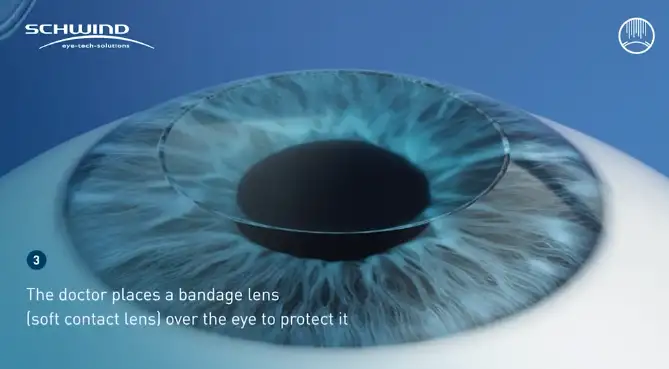
- A bandage contact lens is placed during healing.
Recovery:
Visual recovery takes longer (typically several days to 1–2 weeks), but corneal structural integrity is preserved.
Who Is a Good Candidate?
Eligibility is based on:
- Stable refractive error for at least 1 year
- Adequate corneal thickness
- No active ocular disease
- No uncontrolled autoimmune disorders
All-Laser LASIK is often preferred for patients who want faster recovery.
LASEK may be recommended for:
- Thin corneas
- High-risk contact sports participants
- Patients concerned about flap-related risks
A comprehensive corneal topography and tomography evaluation is essential before deciding.
Safety Profile and Clinical Evidence (2026 Perspective)
Excimer laser refractive surgery has more than 25 years of global clinical data. According to peer-reviewed ophthalmology studies and international refractive surgery guidelines:
- Over 95% of properly selected patients achieve 20/25 vision or better.
- Serious complications are uncommon when performed in accredited centers.
- Ectasia risk is minimized through modern screening protocols (corneal mapping + biomechanical analysis).
The Amaris platform’s high-frequency eye tracking and energy efficiency help reduce induced higher-order aberrations compared to earlier-generation lasers.
However, no surgical procedure is risk-free.
Potential Risks and Side Effects
Common temporary effects:
- Dry eye symptoms
- Light sensitivity
- Mild glare or halos at night
- Fluctuating vision during early healing
Less common risks:
- Undercorrection or overcorrection
- Flap complications (LASIK only)
- Corneal haze (LASEK, rare with modern protocols)
- Corneal ectasia (rare with proper screening)
Dry eye management protocols in 2026—including preoperative tear film optimization—significantly reduce postoperative discomfort.
Real-World Clinical Scenario
Case Example (Typical Experience):
A 29-year-old software engineer with -5.50D myopia and mild astigmatism sought independence from glasses. Corneal thickness was adequate at 540 microns.
After full diagnostic mapping:
- All-Laser LASIK was recommended.
- Surgery time: approximately 10 minutes per eye.
- Visual acuity: 20/20 on postoperative day 1.
- Mild dryness managed with preservative-free artificial tears.
Contrast this with a 24-year-old martial arts instructor with thinner corneas:
- LASEK was recommended.
- Recovery took 7 days.
- Final vision stabilized at 1 month with 20/20 acuity.
These decisions reflect clinical customization—not marketing preference.
Recovery Timeline
| Time After Surgery | LASIK | LASEK |
|---|---|---|
| 1 Day | Clear functional vision | Blurry, mild discomfort |
| 3–5 Days | Stable daily activity | Vision improving |
| 1–2 Weeks | Fully stable | Near full clarity |
| 1–3 Months | Complete neural adaptation | Complete neural adaptation |
Visual quality—including contrast sensitivity—continues refining over weeks as the brain adapts.
Long-Term Outcomes
When candidacy screening is properly conducted:
- Results are stable for years.
- Most patients do not require enhancement.
- Age-related presbyopia still occurs after 40–45 years.
- Cataract development later in life is unrelated to LASIK/LASEK.
Refractive surgery reshapes the cornea; it does not prevent normal aging changes of the lens.
How All-Laser Technology Improves Predictability
Modern refractive surgery in 2026 integrates:
- Corneal tomography (3D mapping)
- Ocular wavefront analysis
- Cyclotorsion control
- AI-assisted treatment planning algorithms
This multi-layered planning improves accuracy and reduces regression risk compared to early 2000s laser systems.
Final Clinical Perspective (2026)
All-Laser LASIK and LASEK using the SCHWIND AMARIS in Gangnam, Seoul represent advanced, evidence-based refractive surgery options that prioritize precision, safety, and customization. The choice between procedures depends on corneal anatomy, lifestyle, and risk tolerance—not marketing claims.
In modern ophthalmology practice, successful outcomes rely on:
- Accurate diagnostics
- Personalized treatment planning
- Experienced surgical execution
- Structured postoperative care
For appropriately selected candidates, these technologies offer reliable visual correction with high predictability and long-term satisfaction.
FAQs
What is All-Laser LASIK & LASEK with SCHWIND AMARIS in Gangnam, Seoul?
All-Laser LASIK & LASEK with SCHWIND AMARIS in Gangnam, Seoul are advanced vision correction procedures that use the Amaris excimer laser vision correction platform to reshape the cornea and treat myopia, hyperopia, and astigmatism with high precision and intelligent eye tracking.
Is SCHWIND AMARIS better than traditional blade LASIK?
Yes, All-Laser LASIK with SCHWIND AMARIS in Gangnam, Seoul uses blade-free LASIK surgery 2026 technology, combining femtosecond laser flap creation and advanced excimer laser treatment, improving flap predictability and treatment accuracy compared to mechanical microkeratomes.
Who is a good candidate for topography-guided LASEK treatment?
Topography-guided LASEK treatment with SCHWIND AMARIS in Gangnam, Seoul is often recommended for patients with thinner corneas, mild corneal irregularities, or those seeking surface-based refractive surgery without a corneal flap.
How long does recovery take after Amaris excimer laser vision correction?
Recovery after All-Laser LASIK with SCHWIND AMARIS in Gangnam, Seoul is typically rapid, with functional vision within 24–48 hours. LASEK may require several days to weeks for full visual clarity due to epithelial healing.
Is All-Laser LASIK & LASEK in Gangnam, Seoul with SCHWIND AMARIS safe in 2026?
When performed after comprehensive corneal screening and by experienced surgeons, All-Laser LASIK & LASEK with SCHWIND AMARIS in Gangnam, Seoul demonstrate strong safety profiles, enhanced precision, and predictable visual outcomes using advanced eye-tracking technology.