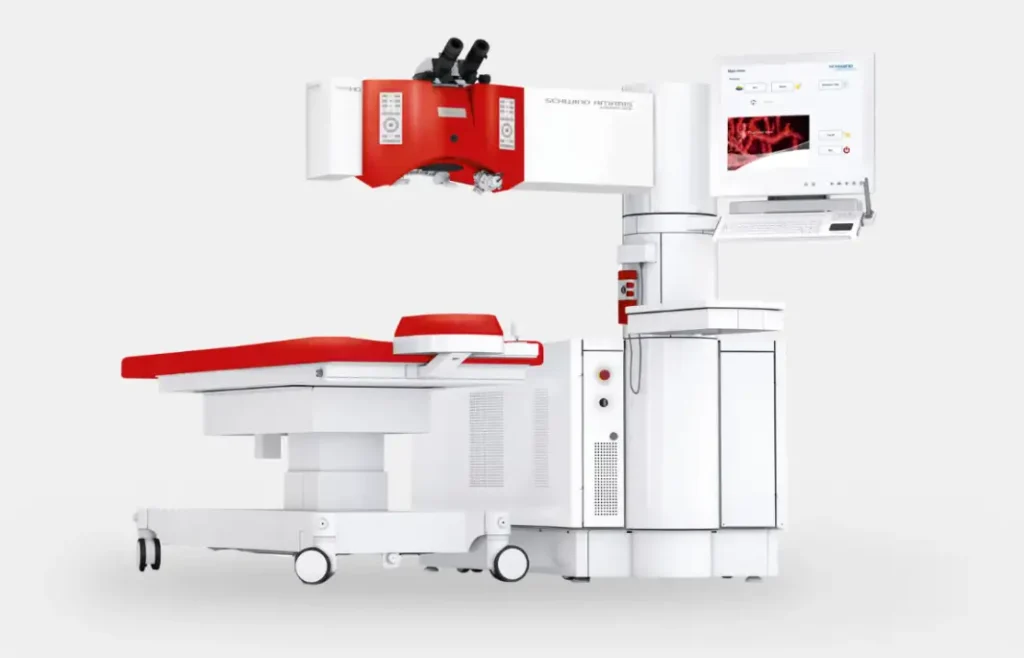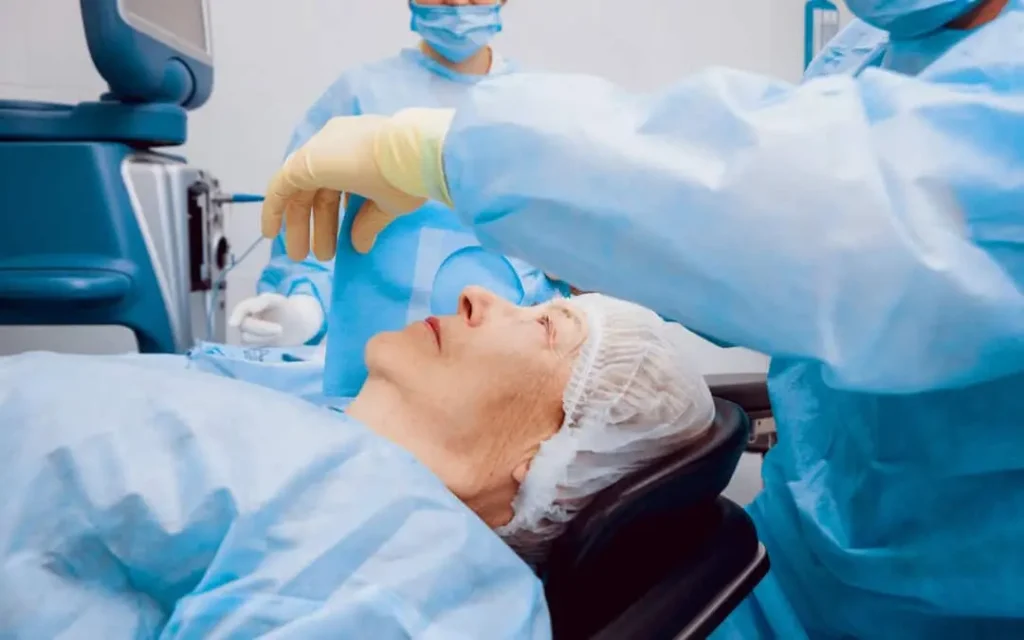

Cataract surgery in Korea for foreigners is a medical procedure that replaces the cloudy natural lens with an intraocular lens (IOL). Costs vary by clinic and lens type, while recovery generally begins quickly but may take several weeks for complete healing. Foreign patients should compare total costs, IOL options and follow-up care.
koreaeyeclinic.com
Cataract surgery in Korea can be an attractive option for international patients seeking modern ophthalmic care, a wide range of intraocular lenses (IOLs), and dedicated international-patient services. However, the most important question is not simply “How much does cataract surgery cost in Korea?” The better question is “Which lens and surgical plan is appropriate for my eyes, lifestyle, and long-term visual goals—and what exactly is included in the quoted price?”
For foreign patients paying privately, publicly listed 2026 prices show a broad range. One Seoul international eye center lists cataract surgery at approximately ₩2 million–₩3 million per eye for monofocal surgery and ₩4 million–₩7 million per eye for multifocal surgery, while another Seoul clinic lists IOL-inclusive prices ranging from ₩1.5 million for a monofocal lens to ₩6.5 million for a premium multifocal IOL per eye. These figures demonstrate why a clinic’s headline price should never be compared without checking the lens, examinations, follow-up, and additional procedures included.
Table of Contents

Is Cataract Surgery in Korea Worth Considering for Foreigners?
Yes, potentially—but the decision should be based on the surgeon’s assessment, IOL selection, total cost, follow-up arrangements, and your ability to remain in Korea long enough for appropriate postoperative care.
Cataract surgery removes the cloudy natural lens and replaces it with an artificial intraocular lens. It is currently the definitive surgical treatment for a visually significant cataract. The National Eye Institute reports that about 9 out of 10 people see better after cataract surgery, although individual outcomes vary.
For international patients, Korea may be particularly appealing because:
- Seoul has a large concentration of specialized eye clinics.
- International-patient services may be available in English and other languages.
- Patients can choose among monofocal, enhanced monofocal, EDOF, multifocal, and toric IOLs depending on availability and clinical suitability.
- Some clinics publish international-patient pricing online.
- Cataract surgery is generally an outpatient procedure, allowing many patients to return to accommodation the same day.
However, cataract surgery is still medical treatment—not simply a cosmetic or travel service. The safest choice is the treatment plan that matches the patient’s eyes and visual priorities rather than the most expensive lens or the shortest advertised package.
What Is Cataract Surgery?
A cataract occurs when the eye’s natural crystalline lens becomes cloudy. The clouded lens can cause blurred or hazy vision, reduced contrast, glare, difficulty driving at night, and changes in how colors appear.
During cataract surgery, the surgeon removes the cloudy natural lens and replaces it with an artificial intraocular lens (IOL). The procedure is normally performed using local or topical anesthesia, and patients are generally awake but should not feel significant pain.
The surgery itself may be relatively short, but international patients should not confuse short operating time with the total medical process.
A complete cataract journey can include:
- Initial consultation
- Comprehensive eye examination
- Biometry and IOL calculations
- Corneal and retinal evaluation when indicated
- Lens selection
- Surgery
- Postoperative medication
- Early postoperative examination
- Additional follow-up
- Final visual assessment
This distinction is particularly important when comparing Korean clinics.
Cataract Surgery Cost in Korea for Foreigners
There is no single nationwide price for cataract surgery in Korea.
The final price can vary according to:
- Monofocal versus premium IOL
- Toric correction for astigmatism
- EDOF or multifocal technology
- Diagnostic testing
- Surgical technology
- Hospital or clinic
- Surgeon and treatment complexity
- Additional retinal or glaucoma treatment
- Postoperative care
- Whether the quoted price includes the IOL
A Seoul international-patient price list currently published online gives the following examples:
| Treatment | Published price | Basis |
|---|---|---|
| Cataract pre-surgery tests | ₩400,000–₩500,000 | Clinic-listed |
| Monofocal cataract surgery | ₩2,000,000–₩3,000,000 | Per eye |
| Multifocal cataract surgery | ₩4,000,000–₩7,000,000 | Per eye |
| Artificial lens in certain procedures | ₩2,000,000–₩7,000,000 | Per eye, depending on lens |
These are published clinic prices, not a universal Korean market average. Actual charges can change after examination and lens selection.
Another Seoul clinic’s 2026 price information lists:
- Monofocal IOL: approximately ₩1.25 million per eye
- Eyhance: approximately ₩2.5 million per eye
- Several premium IOLs: approximately ₩3 million–₩4 million per eye
- Premium options such as Synergy: approximately ₩7 million per eye
- Toric and high-power versions can cost more.
The clinic states that exact costs are confirmed after a detailed examination.
Why do cataract prices differ so much?
The IOL is one of the biggest variables.
A basic monofocal lens generally focuses at one principal distance. Premium lenses may attempt to provide a broader range of useful vision, potentially reducing dependence on glasses for certain activities.
However, more expensive does not automatically mean better for every patient.
The right lens depends on factors such as:
- Corneal astigmatism
- Retinal health
- Macular condition
- Dry eye
- Glaucoma
- Previous eye surgery
- Pupil characteristics
- Night-driving requirements
- Reading habits
- Expectations regarding glasses
Cataract Lens Options: Which IOL Is Best?
One of the most important decisions in cataract surgery is the choice of IOL.
1. Monofocal IOL
A monofocal IOL is designed to provide clear vision primarily at one selected distance.
For example, a patient may choose good distance vision and continue using reading glasses.
Potential advantages
- Long-established lens category
- Generally straightforward optical design
- Often less expensive
- May be a good choice for patients who prioritize predictable distance vision
Potential limitation
Reading glasses may still be necessary.
2. Enhanced Monofocal IOL
Enhanced monofocal lenses attempt to extend the useful range of vision compared with a conventional monofocal lens.
They may be worth discussing with patients who want more intermediate vision while retaining a monofocal-style optical approach.
The exact visual benefit varies between lens models and individual eyes.
3. EDOF IOL
EDOF means Extended Depth of Focus.
These lenses are designed to create a broader range of functional vision rather than simply focusing at one point.
They can be considered by patients who place a high value on intermediate vision, such as:
- Computer work
- Tablet use
- Dashboard viewing
- Everyday household activities
However, EDOF lenses do not guarantee spectacle independence at every distance.
4. Multifocal or Trifocal IOL
Multifocal and trifocal lenses divide or distribute light to provide multiple focal ranges.
They may reduce dependence on glasses for:
- Distance
- Intermediate vision
- Near vision
This can be appealing to patients with cataract and presbyopia.
But premium multifocal lenses involve trade-offs. Some patients may experience phenomena such as:
- Halos
- Glare
- Reduced contrast
- Difficulty adapting to the optical system
Therefore, premium IOL selection should be based on a detailed examination and realistic expectations—not simply the promise of being “glasses-free.”
5. Toric IOL
A toric IOL is designed to correct significant corneal astigmatism during cataract surgery.
For patients with astigmatism, toric correction may be an important part of achieving the desired postoperative visual result.
The exact lens power and axis must be calculated carefully.
How Should Foreign Patients Choose an IOL?
Instead of asking:
“Which is the most expensive lens?”
Ask:
“Which lens provides the best balance between my visual priorities, eye health, optical tolerance, and budget?”
A useful decision framework is:
| Your priority | Lens category to discuss |
|---|---|
| Simple distance vision | Monofocal |
| Distance + some intermediate range | Enhanced monofocal |
| Intermediate-focused lifestyle | EDOF |
| Maximum reduction in glasses dependence | Multifocal/trifocal |
| Significant astigmatism | Toric version where appropriate |
| Frequent night driving | Carefully evaluate optical side effects before premium multifocal selection |
This table is a discussion framework, not a prescription. The final IOL decision should be made with an ophthalmologist after examination.
What Happens During Cataract Surgery in Korea?
Although individual protocols differ, the process generally follows several stages.
Step 1: Comprehensive examination
The clinic measures the eye and evaluates the cornea, lens, retina, and other structures.
The National Eye Institute notes that measurements of the eye’s size and shape help doctors determine the appropriate IOL.
Step 2: IOL calculation and consultation
The surgeon discusses visual goals and selects an appropriate lens.
For international patients, this is an especially important appointment because communication should cover:
- Current glasses prescription
- Reading habits
- Computer use
- Night driving
- Previous eye surgery
- Desired postoperative vision
- Willingness to use reading glasses
Step 3: Surgery
The cloudy lens is removed and replaced with the IOL.
Some Korean clinics advertise surgery times of approximately 10 minutes per eye, but patients should understand that the total clinic visit is considerably longer because examination, preparation, consultation, recovery, and postoperative assessment are also involved.
Step 4: Postoperative monitoring
The clinic checks the eye and provides postoperative instructions and medications.
Cataract Surgery Recovery in Korea
Cataract surgery recovery is usually faster than many patients expect, but visual stabilization continues after the operation.
The National Eye Institute reports that discomfort commonly improves within one or two days, while complete healing may take around eight weeks.
A simplified recovery timeline may look like this:
First 24 hours
You may experience:
- Blurry vision
- Mild irritation
- Light sensitivity
- Foreign-body sensation
- Increased tearing
You should avoid driving immediately after surgery.
First few days
Vision often begins to improve, although it can fluctuate.
Use postoperative eye drops exactly as prescribed.
First few weeks
The eye continues healing. Your doctor may advise avoiding certain activities such as touching the eye, heavy lifting, or other activities that could interfere with healing.
Around 4–8 weeks
Vision generally becomes more stable, although the exact timeline varies.
The final prescription for glasses, if required, may be determined after sufficient healing.
How Long Should Foreigners Stay in Korea After Cataract Surgery?
This is one of the most important questions for medical tourists.
A clinic may advertise a same-day procedure, but same-day surgery does not mean same-day completion of medical care.
International patients should ask the clinic:
- When is the first postoperative examination?
- How many follow-up visits are recommended?
- Can both eyes be operated on during the same trip?
- If one eye is operated on first, when is the second eye treated?
- What happens if complications occur after returning home?
- Can postoperative consultations be conducted remotely?
- Who will provide follow-up care in the patient’s home country?
The National Eye Institute notes that when cataracts affect both eyes, surgery is generally performed separately rather than treating both eyes as a single operation.
For a foreign patient, the safest travel schedule should therefore be based on the surgeon’s follow-up protocol rather than a tourism itinerary.
What Foreigners Should Check Before Booking Cataract Surgery in Korea
Before paying a deposit, request a written quotation.
Medical checklist
- Complete eye examination
- Biometry/IOL calculation
- Retinal evaluation when indicated
- Corneal assessment
- Astigmatism evaluation
- Dry-eye evaluation if relevant
- IOL brand and exact model
- Surgeon consultation
- Postoperative examination
- Prescription eye drops
Financial checklist
Ask whether the quotation includes:
- Surgery
- IOL
- Diagnostic tests
- Medication
- Postoperative visits
- Additional procedures
- Translation/coordination
- Any anesthesia or facility fees
A low advertised price may not be comparable with a higher quote if the two packages include different IOLs or diagnostic services.
Common Mistakes Foreign Patients Make
Mistake 1: Choosing a clinic based only on price
The cheapest cataract package is not necessarily the best value.
A better comparison is:
Total cost + lens quality/options + surgeon expertise + diagnostics + follow-up + communication.
Mistake 2: Choosing the most expensive IOL automatically
Premium lenses are not universally superior.
Patients with retinal disease, corneal problems, significant dry eye, or other ocular conditions may not be ideal candidates for certain premium optical designs.
Mistake 3: Assuming “no glasses” means literally no glasses
Even after premium IOL implantation, some patients may occasionally need glasses.
Visual outcomes depend on the eye, IOL, calculations, healing, and individual adaptation.
Mistake 4: Booking a flight home immediately
Cataract surgery is a medical procedure, not a quick beauty treatment.
Plan postoperative care before purchasing a non-refundable flight.
Mistake 5: Comparing per-eye and both-eye prices
Always check whether the quoted amount is:
- Per eye
- Both eyes
- Surgery only
- Surgery plus IOL
- Full package
This single distinction can make two apparently similar prices completely different.
What Are the Risks of Cataract Surgery?
Cataract surgery is considered a highly successful procedure, but it is not risk-free.
Potential complications include:
- Infection
- Bleeding
- Swelling
- Changes in eye pressure
- Retinal detachment
- Double vision
- Vision loss
- Posterior capsule opacification, sometimes called a “secondary cataract”
The National Eye Institute emphasizes that patients should contact their eye doctor promptly if they develop significant pain, vision loss, marked redness, flashes, or a sudden increase in floaters.
Because international patients may travel far from the surgical clinic, they should obtain clear emergency instructions before leaving Korea.
What Makes Cataract Surgery in Korea Different for International Patients?
The biggest advantage is not necessarily the lowest price.
For international patients, the more meaningful factors can include:
Multilingual communication
Some Korean eye clinics offer English and other language support, which can make consultations and postoperative instructions easier to understand. Current clinic and Korea tourism listings show services marketed to English-speaking and other international patients.
Wide IOL selection
Some Seoul clinics advertise extensive selections covering monofocal, enhanced monofocal, EDOF, multifocal, trifocal, and toric lenses.
Transparent international pricing
Some clinics publicly list prices specifically for international patients, which makes preliminary comparisons easier. However, online prices should still be confirmed directly because lens availability, examination findings, and treatment plans can change.
Is Korea Right for Your Cataract Surgery?
Consider Korea if you value:
- A broad selection of IOL technologies
- Specialist ophthalmology clinics
- International-patient coordination
- English-language or multilingual communication
- Transparent pricing from clinics that publish international packages
- Combining medical treatment with a planned stay in Korea
Consider delaying a medical trip if:
- You have not completed a comprehensive eye examination
- You do not know which IOL you need
- You have significant untreated retinal or ocular disease
- You cannot remain in Korea for appropriate follow-up
- The clinic cannot explain what happens if complications occur after returning home
- The quotation is unclear about the IOL and postoperative care
FAQs

How much does cataract surgery cost in Korea for foreigners?
Cataract surgery cost in Korea varies according to the clinic, diagnostic tests, surgical plan and IOL. Monofocal lenses are generally less expensive than premium EDOF, multifocal, trifocal or toric options. Foreign patients should request a complete per-eye quotation covering the IOL, surgery, examinations, medication and follow-up care.
What are the best cataract lens options in Korea?
Cataract lens options in Korea include monofocal, enhanced monofocal, EDOF, multifocal, trifocal and toric IOLs. The best option depends on eye health, astigmatism, reading and computer use, night driving, desired spectacle independence and tolerance for optical effects such as halos or glare.
How long is cataract surgery recovery in Korea?
Cataract surgery recovery in Korea usually begins immediately after surgery, with vision often improving over the following days. However, complete healing can take several weeks. Foreign patients should arrange postoperative examinations before planning their return flight and confirm how follow-up care will be handled after returning home.
Can foreigners have cataract surgery in Korea?
Yes. Cataract surgery in Korea for foreigners is available at Korean ophthalmology clinics that provide international-patient services. Patients should confirm language support, medical eligibility, IOL availability, total treatment costs, required examinations and postoperative arrangements directly with the selected clinic before booking.
Can cataract surgery in Korea eliminate the need for glasses?
Premium cataract lens options in Korea can reduce dependence on glasses for some patients, but complete spectacle independence cannot be guaranteed. Monofocal IOLs typically provide clear vision at one primary distance, while EDOF and multifocal or trifocal lenses can provide a broader range of vision but may have optical trade-offs.
Final Takeaway
Cataract surgery in Korea can be a practical option for foreign patients, but the right decision should be based on the complete treatment plan—not simply the advertised surgical price.
In 2026, publicly available Korean clinic pricing demonstrates a broad spectrum from standard monofocal treatment to high-end premium IOL options. The most important cost variable is often the lens and what the package includes.
Before booking, compare the surgeon, diagnostic testing, IOL model, total price per eye, postoperative care, international communication, and emergency arrangements.
For most patients, the best cataract surgery is not necessarily the cheapest or the most technologically sophisticated. It is the procedure and IOL combination that provides an appropriate balance of eye health, visual goals, optical quality, safety, cost, and long-term expectations.
References
- BSM Eye Care Clinic – Presbyopia & Cataract Surgery
- National Eye Institute (NEI) — Cataract Surgery
Information on cataract surgery, IOL selection, preparation, recovery, healing time, outcomes, and potential complications.
National Eye Institute: Cataract Surgery - VisitKorea — Korean Ophthalmology: From Vision Correction to Severe Illness Treatment
Overview of Korea’s ophthalmology services, cataract treatment, international patients, surgical accessibility, and Korean ophthalmic healthcare.
VisitKorea: Korean Ophthalmology - BSM Eye Clinic – International Patient Information