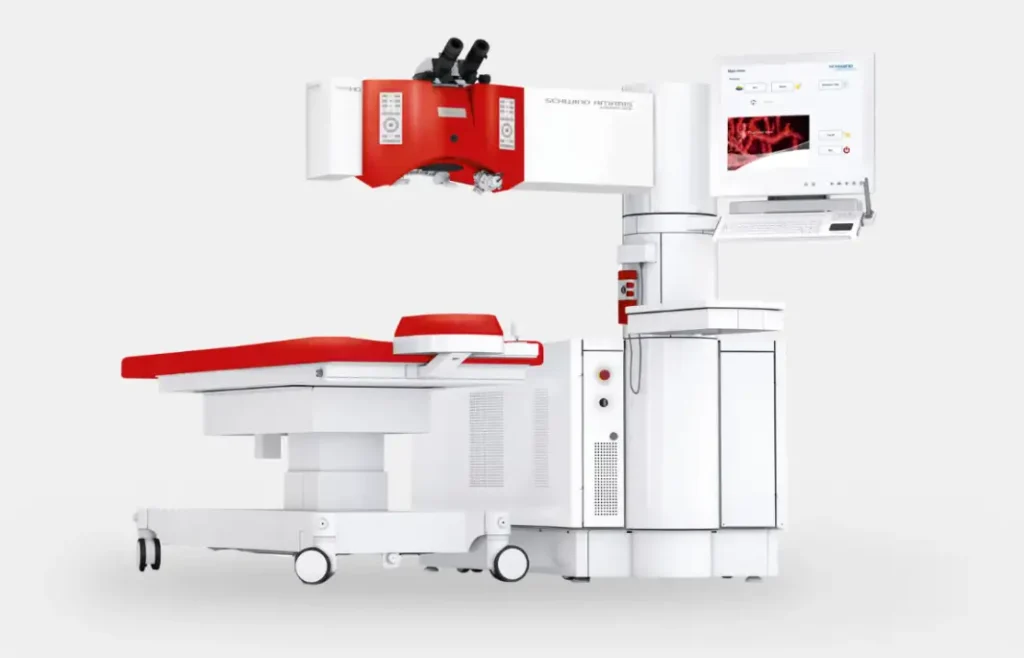

You may be able to fly after SMILE LASIK or LASEK once your ophthalmologist confirms that your eyes are healing normally. SMILE often has faster early recovery, while LASEK generally needs more healing time. International patients should complete postoperative checks before booking or taking a long-haul flight.
koreaeyeclinic.com
If you are traveling to South Korea for vision correction surgery, one of the most practical questions is: Can you fly after SMILE LASIK or LASEK? In many cases, flying home is possible after refractive eye surgery, but the timing should be based on your postoperative examination and your ophthalmologist’s clearance rather than a fixed number of hours or days. SMILE generally has a faster early recovery, while LASEK involves surface healing and usually requires more recovery time before long-distance travel is comfortable.
For international patients, the safest approach is to build your itinerary around the medical process: preoperative examination → surgery → early postoperative examination → travel clearance → flight home. This is particularly important after LASEK because vision may remain blurry, light sensitivity can occur, and a protective contact lens may be used during the initial healing period. BSM Eye Care Clinic in Seoul advises that LASEK vision gradually improves over several days and becomes clearer and more stable over the following weeks.
Table of Contents

Can You Fly After SMILE LASIK?
Usually, air travel after SMILE may be possible once your ophthalmologist has examined your eyes and confirms that early healing is progressing normally. The key issue is not simply cabin pressure. It is whether your eyes are sufficiently comfortable, your vision is adequate for travel, you can manage your prescribed eye drops, and you have completed the necessary early postoperative examination.
SMILE, or Small Incision Lenticule Extraction, reshapes the cornea by removing a small lenticule through a small incision rather than creating a conventional LASIK flap. Because there is no large corneal flap, the early recovery profile differs from traditional LASIK.
However, a faster recovery does not mean that international patients should automatically schedule a flight immediately after surgery.
During the first days, patients may experience:
- Blurred or fluctuating vision
- Dryness
- Light sensitivity
- Tearing
- Mild irritation or foreign-body sensation
- Temporary differences in visual clarity between the two eyes
BSM Eye Care Clinic’s postoperative guidance notes that these symptoms can occur after SMILE and recommends artificial tears and appropriate postoperative eye care. The clinic also states that driving is usually possible from the following day depending on individual recovery, but driving clearance and flying clearance are not the same thing.
Why shouldn’t you rush onto a plane after SMILE?
A commercial aircraft cabin is a dry environment, and prolonged exposure to conditioned air can make postoperative dryness more noticeable. A long flight also means sitting for several hours, managing eye drops away from home, and potentially being far from the surgeon who performed the procedure.
For a domestic or short flight, these practical issues may be relatively manageable. For an international flight from Seoul to North America, Europe, Australia, or another distant destination, the situation is different.
The question should therefore be:
“Has my ophthalmologist confirmed that I am ready to travel?”
rather than:
“How many hours after SMILE can I fly?”
That distinction is particularly important for medical tourists.
Can You Fly After LASEK?
LASEK generally requires more patience than SMILE before international travel because the corneal surface needs time to heal.
Unlike SMILE, LASEK involves treatment at the surface of the cornea. During the early healing period, patients may experience more discomfort, light sensitivity, tearing, and blurred vision.
BSM Eye Care Clinic reports that after its Today LASEK procedure, vision generally improves gradually over approximately 3–5 days, with clearer and more stable vision developing over 1–2 weeks. The clinic also notes that a protective contact lens may be worn for several days during surface healing.
This makes the timing of an international flight particularly important.
A patient who flies too early may have to deal with:
- Significant light sensitivity at the airport
- Blurred vision while navigating unfamiliar surroundings
- Dryness during a long flight
- Difficulty managing postoperative medication
- Limited access to the original surgeon
- Difficulty attending a scheduled follow-up examination
Therefore, LASEK patients should generally plan a longer stay in Korea than patients undergoing a faster-recovery procedure, unless their surgeon specifically confirms an earlier departure is appropriate.
Is Flying Dangerous Because of Cabin Pressure?
For most uncomplicated corneal laser procedures, the concern is not comparable to the situation involving certain eye surgeries where intraocular gas is used.
SMILE and LASEK are corneal refractive procedures, and they do not involve placing a gas bubble inside the eye.
Nevertheless, that does not mean that flying immediately after surgery is automatically appropriate.
The more relevant concerns for refractive-surgery travelers include:
- Healing status
- Visual clarity
- Dry-eye symptoms
- Light sensitivity
- Medication management
- Access to postoperative care
- The length and conditions of the flight
The FDA notes that after refractive surgery, patients may experience blurry vision, discomfort, light sensitivity, glare, halos, and other temporary symptoms. It also recommends early postoperative assessment and emphasizes contacting the doctor promptly if severe pain or worsening vision occurs.
So, while cabin pressure itself is not usually the primary issue after uncomplicated SMILE or LASEK, the overall postoperative situation still matters.
SMILE vs LASEK: Which Is Easier for a Korea Trip?
For international patients planning surgery in Seoul, the recovery profiles can influence how long the trip should be.
| Factor | SMILE | LASEK |
|---|---|---|
| Surgical approach | Small corneal incision and lenticule removal | Surface-based corneal treatment |
| Early visual recovery | Generally rapid | Usually slower |
| Early discomfort | Often relatively mild | Can be more noticeable |
| Light sensitivity | Possible | Common during early healing |
| Early blurred vision | Possible | Common |
| Surface healing | Less extensive than LASEK | Important part of recovery |
| International travel planning | Usually easier | Usually requires more flexibility |
| Follow-up importance | Essential | Especially important during surface healing |
This table should not be interpreted as a guarantee that one procedure will always recover faster for every patient. Individual healing varies.
The important point for travelers is that SMILE may fit a shorter itinerary more easily, while LASEK often benefits from a longer recovery window in Korea.
How Long Should You Stay in Korea After SMILE?
There is no single medically appropriate number of days for every international patient.
A practical itinerary can look like this:
Day 1: Examination
The patient arrives in Seoul and completes a comprehensive eye examination.
Testing may include:
- Visual acuity
- Refraction
- Corneal thickness
- Corneal topography or tomography
- Tear-film assessment
- Pupil assessment
- Retinal examination
- Other tests required by the ophthalmologist
BSM Eye Care Clinic states that its comprehensive SMILE examination may take up to two hours because multiple measurements are required before determining suitability.
Day 2: Surgery
If the examination confirms that SMILE is appropriate, surgery can be performed according to the surgeon’s treatment plan.
The patient should avoid treating this day as a sightseeing day.
Day 3 or later: Postoperative assessment
The ophthalmologist evaluates early recovery and confirms whether healing is progressing as expected.
Only after this assessment should an international patient finalize the timing of the return flight.
Departure
Before leaving Korea, the patient should have:
- Prescribed eye drops
- Clear medication instructions
- Postoperative precautions
- Emergency contact information
- Copies of relevant medical records
- A plan for follow-up after returning home
BSM Eye Care Clinic specifically describes a postoperative follow-up and post-recovery examination as part of its SMILE care process.
How Long Should You Stay in Korea After LASEK?
LASEK generally deserves a more conservative travel schedule.
The reason is simple: the corneal surface must heal.
According to BSM Eye Care Clinic, patients undergoing Today LASEK may experience gradual visual improvement over the first several days, with clearer and more stable vision developing over the following 1–2 weeks. Full recovery and visual stabilization can take longer depending on individual healing.
For an international patient, this means you should avoid planning a rigid itinerary such as:
Arrive Monday → LASEK Tuesday → sightseeing Wednesday → fly Thursday
That schedule leaves little flexibility if your vision is still uncomfortable or your surgeon wants an additional examination.
A better strategy is:
Arrive → examination → surgery → early recovery → follow-up → clearance → departure
The extra flexibility is especially valuable if your trip involves a long-haul flight.
What Happens to Your Eyes During a Long Flight?
The aircraft environment can be uncomfortable for recently treated eyes.
1. Dry cabin air
Aircraft cabins have relatively low humidity. This can increase ocular-surface discomfort, particularly when your eyes are already prone to postoperative dryness.
2. Reduced blinking
Passengers often blink less while looking at phones, tablets, laptops, or entertainment screens.
After refractive surgery, prolonged screen use can make dryness and visual fatigue more noticeable.
3. Air-conditioning
Direct airflow toward your face can worsen irritation.
If possible, avoid directing the overhead air vent directly at your eyes.
4. Eye rubbing
This is particularly important during early recovery.
If your eyes feel dry or irritated, use the postoperative drops recommended by your surgeon rather than rubbing them.
5. Medication management
Keep postoperative eye drops in your carry-on luggage rather than checked baggage. Follow the storage instructions provided by your clinic.
Practical Flight Tips After SMILE or LASEK
If your ophthalmologist has cleared you for travel, the following measures can make the journey more comfortable.
Before boarding
- Complete the recommended postoperative examination.
- Confirm that your vision is adequate for travel.
- Obtain your postoperative medication.
- Keep eye drops accessible.
- Carry your medical instructions.
- Wear sunglasses if light sensitivity remains.
- Avoid scheduling strenuous activities immediately before or after the flight.
During the flight
- Use prescribed or recommended lubricating drops as instructed.
- Avoid rubbing your eyes.
- Take regular breaks from screens.
- Keep your eyes closed periodically if they feel tired.
- Avoid direct airflow from the overhead vent.
- Drink fluids normally.
- For long flights, move around periodically according to general travel-health advice.
After landing
Do not assume that arriving home means postoperative care is finished.
Arrange follow-up with an eye-care professional if recommended by your surgeon, especially if you develop unusual symptoms.
The CDC advises medical tourists to arrange follow-up care before traveling and to obtain copies of medical records from overseas treatment. It also emphasizes that postoperative travel and vacation activities can create additional challenges during recovery.
What Should You Avoid Before Flying Home?
Even if your vision seems good, recovery is not necessarily complete.
Depending on your procedure and surgeon’s instructions, you may need to avoid:
- Swimming
- Hot tubs
- Contact sports
- Eye rubbing
- Heavy exercise
- Excessive alcohol
- Dusty or smoky environments
- Long periods of uninterrupted screen use
For example, BSM Eye Care Clinic advises avoiding swimming and high-impact or contact activities during the early recovery period and recommends specific restrictions for exercise, makeup, hair treatments, and other activities after SMILE.
The same principle applies after LASEK, where protecting the healing corneal surface is particularly important.
When Should You Delay Your Flight?
You should contact your ophthalmologist rather than board your flight if you develop concerning symptoms such as:
- Severe or increasing eye pain
- Sudden reduction in vision
- Vision that is getting worse rather than better
- Significant redness or discharge
- Severe light sensitivity
- New or rapidly increasing visual disturbances
- Any symptom your surgeon has identified as requiring urgent assessment
The FDA specifically advises patients to contact their doctor immediately if severe pain occurs or if vision or other symptoms worsen instead of improving.
For an international patient, this is one of the strongest reasons to schedule an early postoperative examination before the return flight.
What About Sightseeing After Eye Surgery in Seoul?
A medical trip does not have to mean staying inside your hotel for the entire recovery period, but your activities should match your healing stage.
During the first few days, consider prioritizing:
- Rest
- Short, relaxed walks
- Indoor activities
- Medication schedules
- Follow-up appointments
Avoid turning the recovery period into an intensive sightseeing itinerary.
Long walking tours, crowded attractions, dusty environments, prolonged screen use, swimming, strenuous exercise, and late nights can make recovery less comfortable.
The CDC specifically warns medical tourists that common vacation activities such as strenuous exercise, swimming, sunbathing, long tours, and alcohol consumption during the postoperative period may interfere with recovery.
Can You Fly Home the Day After SMILE?
It may be possible for some patients, but it should not be treated as a standard recommendation.
The decision should be made after the postoperative examination and based on the individual patient’s recovery.
A patient with excellent vision and minimal symptoms may receive different advice from someone experiencing significant dryness, blurred vision, inflammation, or another postoperative concern.
For international travel, a slightly longer stay can provide valuable flexibility.
This is especially relevant because an international flight may last many hours and can put considerable distance between the patient and the operating surgeon.
Can You Fly Home a Few Days After LASEK?
Some patients may be able to travel after an appropriate postoperative assessment, but LASEK generally requires more recovery planning than SMILE.
The early period can involve surface healing, discomfort, light sensitivity, and fluctuating vision. BSM Eye Care Clinic states that LASEK vision can improve over 3–5 days but may continue becoming clearer and more stable over the following 1–2 weeks.
Therefore, a patient should not select a flight solely because a certain number of days have passed.
The better question is whether:
your cornea is healing normally + your vision is adequate + your symptoms are controlled + your ophthalmologist has cleared you to travel.
A Better Korea Medical Tourism Schedule
For international patients, one of the most useful ways to plan is to separate the trip into medical milestones rather than sightseeing milestones.
Recommended planning model
Before Korea
→ Contact the clinic
→ Provide medical history and prescription information
→ Confirm whether an examination is required before surgery
→ Avoid booking a non-refundable return flight immediately after surgery
In Seoul
→ Comprehensive eye examination
→ Ophthalmologist consultation
→ Procedure selection
→ Surgery
→ Postoperative medication
→ Early follow-up examination
Before departure
→ Confirm healing
→ Receive travel instructions
→ Obtain medication
→ Obtain medical records
→ Confirm home-country follow-up if needed
→ Fly only when medically cleared
This approach is more reliable than assuming that every international patient follows the same recovery timetable.
What International Patients Should Ask the Korean Eye Clinic
Before booking a flight, ask your clinic these specific questions:
- When is my first postoperative examination?
- Will I need another examination before flying home?
- Based on my eyes, when do you expect me to be medically cleared for air travel?
- What symptoms should make me postpone my flight?
- How should I use my eye drops during a long flight?
- Can I obtain my medical records in English?
- Who should I contact if I develop symptoms after returning home?
- Do you recommend local follow-up with an ophthalmologist after I return?
- What activities should I avoid during my first week?
- How much flexibility should I leave in my Korea itinerary?
These questions are particularly important for medical tourists because continuity of care can become more complicated after returning home. The CDC recommends arranging follow-up care and ensuring that relevant medical records can be transferred to healthcare professionals who may provide subsequent care.
SMILE or LASEK for a Short Korea Trip?
If your primary concern is minimizing time in Korea, it is tempting to select the procedure with the fastest advertised recovery.
That is the wrong decision-making strategy.
Procedure selection should come first; travel planning comes second.
A comprehensive eye examination determines whether you are actually suitable for SMILE, LASEK, LASIK, or another vision-correction option.
BSM Eye Care Clinic states that procedure selection depends on factors including corneal thickness, prescription, tear-film quality, eye anatomy, age, lens condition, and lifestyle.
In other words, you should not choose SMILE simply because you have a short vacation window, nor should you choose LASEK simply because it may be suitable for certain corneal profiles.
The appropriate procedure should be selected first. Your travel schedule should then be built around the recovery requirements.
FAQs

Can you fly after SMILE LASIK?
Yes, many patients can fly after SMILE LASIK once their ophthalmologist confirms normal early healing. Flying after SMILE LASIK may be relatively convenient because visual recovery is often rapid, but dryness, fluctuating vision, and light sensitivity can still occur. International patients should have a postoperative examination before a long-haul flight.
Can you fly after LASEK?
Flying after LASEK may be possible once your surgeon confirms that the corneal surface is healing appropriately. LASEK generally has a slower early recovery than SMILE, with possible discomfort, light sensitivity, and blurred vision. Patients traveling for Korea eye surgery recovery should allow extra flexibility before booking their return flight.
How soon can I fly after SMILE or LASEK in Korea?
There is no single safe flight interval for every patient. After SMILE LASIK or LASEK in Korea, the appropriate departure time depends on your eye examination, visual recovery, symptoms, medications, and healing. Your ophthalmologist should confirm that you are ready to travel, particularly before a long international flight.
Is flying after SMILE LASIK or LASEK dangerous because of cabin pressure?
For uncomplicated SMILE LASIK or LASEK, cabin pressure is generally not the main postoperative concern. More practical issues include dry cabin air, eye irritation, screen use, medication management, and being far from your surgeon. Korea eye surgery recovery should therefore include appropriate follow-up before international travel.
How should I plan my Korea trip after SMILE or LASEK?
For SMILE LASIK or LASEK in Korea, plan your trip around the medical milestones: comprehensive examination, surgery, postoperative assessment, and travel clearance. Flying after SMILE LASIK may fit a shorter itinerary, while flying after LASEK generally requires more recovery flexibility. Arrange follow-up care at home before departure.
Final Answer: Can You Fly After SMILE LASIK or LASEK?
Yes, many patients can eventually fly home after SMILE or LASEK, but there is no universal “safe flight day” that applies to everyone.
For SMILE, early visual recovery is often relatively rapid, but an international patient should still complete the recommended postoperative assessment before flying.
For LASEK, recovery is generally slower because the corneal surface must heal. Patients may experience several days of discomfort, light sensitivity, and blurred vision, making a longer and more flexible Korea stay sensible.
The most important rule is:
Do not schedule your return flight based only on the procedure name or a generic recovery timeline. Schedule it around your ophthalmologist’s postoperative examination and travel clearance.
For travelers having vision correction surgery in Seoul, the safest itinerary is examination → surgery → postoperative check → medical clearance → flight home.
This approach gives your eyes time to recover while ensuring that any unexpected postoperative issue can be identified before you leave Korea.
If you are planning SMILE or LASEK as an international patient, also remember that recovery does not end when you board the aircraft. Take your prescribed medication with you, protect your eyes from dryness and irritation, avoid rubbing them, follow activity restrictions, and arrange appropriate follow-up after returning home.
Ultimately, the goal should not be the fastest possible flight home. It should be a recovery plan that gives your eyes the best opportunity to heal properly while maintaining access to appropriate postoperative care.
References
- FDA — What Should I Expect During and After LASIK? — postoperative symptoms, follow-up, and warning signs.
- CDC — Medical Tourism Traveler Guidance — planning follow-up care after treatment abroad.
- BSM Eye Care Clinic — SMILE LASIK — clinic-specific SMILE examination, postoperative care, and recovery instructions.
- BSM Eye Care Clinic — International Patient Contact Information