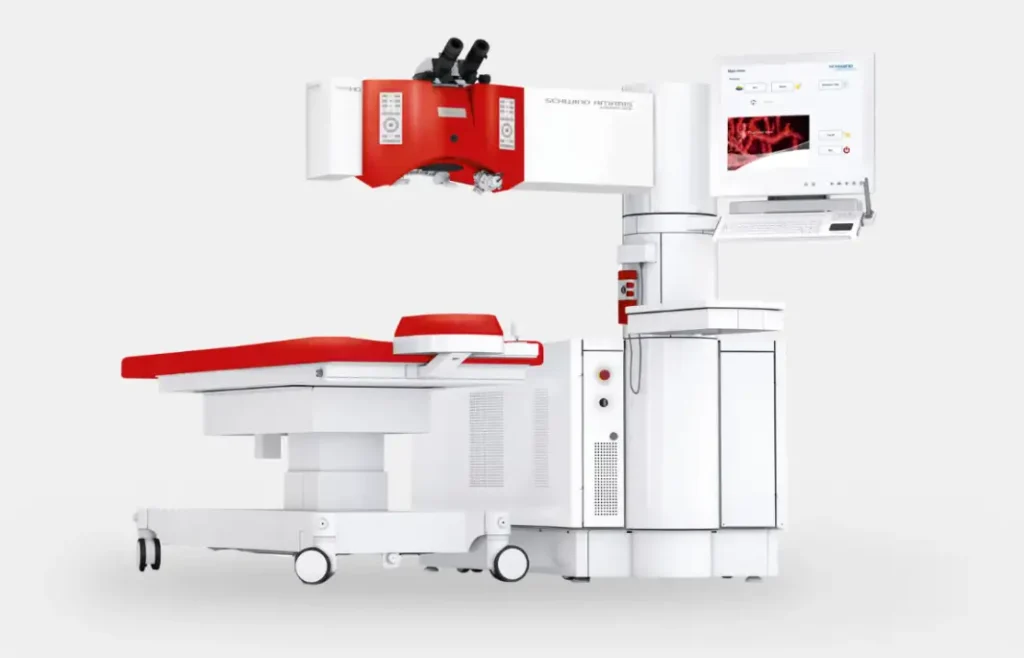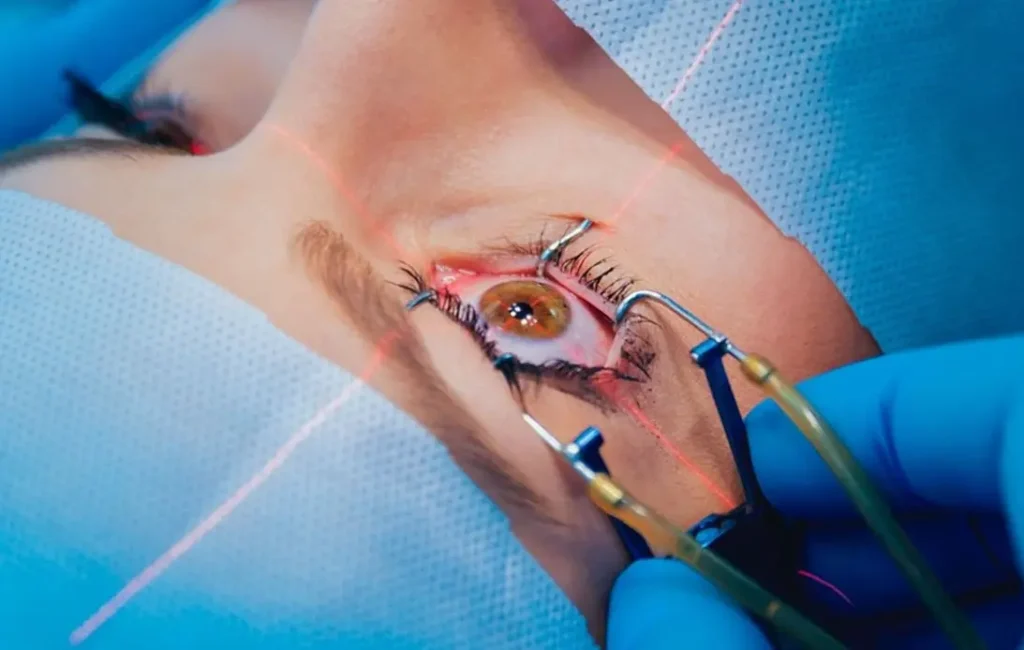

LASIK, SMILE PRO, LASEK, and ICL in Seoul, Korea are suitable for different eye conditions and patient needs. The best option depends on your prescription, corneal thickness and shape, eye health, age, dry-eye status, and lifestyle—not simply which procedure is newest.
koreaeyeclinic.com
If you are comparing LASIK vs SMILE PRO vs LASEK vs ICL, there is no single procedure that is best for everyone. The right choice depends on your prescription, corneal thickness and shape, ocular-surface health, age, eye anatomy, lifestyle, and visual priorities. LASIK and LASEK reshape the cornea with an excimer laser, SMILE removes a corneal lenticule through a small incision, while ICL places a lens inside the eye without removing corneal tissue.
For patients considering vision correction in Korea, the decision should therefore begin with a comprehensive ophthalmic examination, not with the newest technology or the lowest advertised price. Some patients may be excellent candidates for SMILE PRO or LASIK, others may be better suited to LASEK, and patients with high myopia or unsuitable corneal anatomy may be evaluated for ICL instead. The goal is not to find the most advanced procedure—it is to identify the most appropriate risk-benefit profile for your eyes.
Table of Contents

LASIK vs SMILE PRO vs LASEK vs ICL at a Glance
| Procedure | How it works | Potential advantages | Important considerations | Typical recovery profile |
|---|---|---|---|---|
| LASIK | Creates a corneal flap and reshapes the underlying cornea | Very established, rapid functional recovery | Flap-related considerations, dry eye, corneal tissue requirements | Usually fast |
| SMILE PRO | Creates and removes a corneal lenticule through a small incision | No conventional flap, small incision, rapid procedure | Not suitable for every prescription or corneal profile | Usually fast |
| LASEK | Removes/repositions corneal epithelium and uses excimer laser | No LASIK flap, useful in selected corneal profiles | More discomfort and slower visual recovery | Slower |
| ICL | Places a phakic lens inside the eye | Does not remove corneal tissue; useful for selected high myopia | Intraocular surgery, requires adequate anatomy | Often relatively quick, but requires intraocular monitoring |
These descriptions are simplified. The actual procedure, indications, and recovery vary by technology, surgeon, and patient.
What Is LASIK?
LASIK (Laser-Assisted In Situ Keratomileusis) is a corneal refractive procedure. A surgeon creates a corneal flap, uses an excimer laser to reshape the underlying stromal tissue, and then repositions the flap. The objective is to alter the cornea so incoming light focuses more accurately on the retina.
LASIK has been extensively studied and has a long clinical history.
Potential advantages of LASIK
- Extensive clinical experience
- Rapid functional visual recovery for many patients
- Ability to use customized ablation profiles in appropriate cases
- Established treatment options for several refractive errors
Important limitations
LASIK requires creation of a corneal flap. Consequently, flap-related complications are part of its risk profile.
Patients can also experience:
- Dry eye
- Glare
- Halos
- Fluctuating vision
- Residual refractive error
- Undercorrection or overcorrection
- Rare corneal complications
The FDA emphasizes that refractive surgery can have significant complications and that patients should understand both the benefits and risks before treatment.
What Is SMILE PRO?
SMILE PRO is a newer generation of small-incision lenticule extraction performed using the ZEISS VISUMAX 800 platform.
Instead of creating a conventional LASIK flap, the laser creates a lenticule within the cornea. The surgeon removes that lenticule through a small incision, changing the corneal shape to correct the refractive error.
The American Academy of Ophthalmology’s EyeWiki describes SMILE PRO as the newer VisuMax 800 version of the SMILE platform, with features including automated assistance for centration and cyclotorsion.
ZEISS reports that the laser exposure itself can be under 10 seconds for myopic correction on the SMILE PRO platform, although the complete medical appointment is considerably longer than the laser application.
Potential advantages of SMILE PRO
- No conventional LASIK flap
- Small corneal incision
- Rapid laser treatment
- Potentially less disruption to some corneal nerves
- Generally rapid functional recovery
Research comparing SMILE and femtosecond LASIK has found broadly comparable refractive outcomes in appropriately selected patients. Some studies show advantages for SMILE in measures of corneal sensation and tear-film stability, although individual symptoms do not always differ significantly.
But is SMILE PRO automatically better?
No.
A newer laser platform does not make it appropriate for every patient.
The surgeon still needs to evaluate:
- Refractive error
- Corneal thickness
- Corneal topography/tomography
- Ocular-surface condition
- Pupil characteristics
- Eye health
- Treatment range
- Visual requirements
This is particularly important for patients traveling to Korea specifically to request SMILE PRO. The examination should determine the procedure—not the other way around.
What Is LASEK?
LASEK (Laser-Assisted Sub-Epithelial Keratomileusis) is a surface-ablation procedure related to PRK.
Instead of creating a deep LASIK flap, the surgeon works with the corneal epithelium, performs excimer-laser reshaping of the cornea, and places a protective contact lens while the surface heals. EyeWiki notes that the bandage contact lens is typically removed after re-epithelialization, commonly around three or four days.
Potential advantages of LASEK
- No conventional LASIK flap
- Useful for selected patients where flap-based surgery may be less desirable
- Different corneal-tissue profile from LASIK
Disadvantages
The trade-off is generally a slower and more uncomfortable early recovery.
Possible issues include:
- Postoperative discomfort
- Slower visual rehabilitation
- Haze
- Persistent epithelial defects
- Infection risk
- Fluctuating vision
EyeWiki’s current 2026 review identifies postoperative pain/discomfort and slower visual rehabilitation among important disadvantages of LASEK.
Therefore, LASEK may be a reasonable option for a carefully selected patient, but it is usually not the first choice for someone whose only goal is the fastest possible visual recovery.
What Is ICL?
ICL (Implantable Collamer Lens) is fundamentally different from LASIK, SMILE PRO, and LASEK.
Instead of reshaping the cornea, an ICL is implanted inside the eye while the natural crystalline lens remains in place. This makes ICL a phakic intraocular lens procedure.
The FDA-approved EVO/EVO+ ICL is indicated for specific myopia ranges in appropriately selected patients, with requirements including age, stable refraction, anterior chamber depth, and other anatomical criteria.
Potential advantages of ICL
ICL can be particularly relevant when:
- Myopia is relatively high
- Corneal tissue is not ideal for laser correction
- A patient is not a good candidate for corneal refractive surgery
- The patient’s anatomy meets ICL requirements
Because ICL does not remove corneal tissue, it offers a fundamentally different approach to refractive correction.
But ICL is not risk-free
Unlike LASIK, SMILE, and LASEK, ICL involves entering the eye.
Potential concerns include:
- Increased intraocular pressure
- Cataract formation
- Infection
- Inflammation
- Lens positioning issues
- Endothelial-cell concerns
- Need for additional surgery in selected cases
Therefore, ICL should not be presented as a universally safer alternative to laser surgery.
Which Procedure Is Best for High Myopia?
For patients with high myopia, ICL may become particularly important in the discussion, but it is not automatically the best option.
The decision depends on:
- Degree of myopia
- Corneal thickness
- Corneal shape
- Anterior chamber depth
- Endothelial-cell status
- Ocular health
- Age
- Refractive stability
- Patient preferences
EyeWiki notes that intraocular refractive procedures are often considered when patients are not suitable candidates for corneal procedures because of factors such as dry eye, thin corneal tissue, extreme refractive errors, or early lens problems.
The FDA’s EVO ICL labeling also specifies anatomical and refractive requirements rather than allowing the lens to be used simply because someone has a high prescription.
Practical example
Consider a patient with very high myopia who has relatively limited corneal tissue available for laser correction.
A surgeon might determine that removing additional corneal tissue could create an unfavorable risk profile.
In that situation, the discussion may shift from:
“Which laser should I choose?”
to:
“Should an intraocular option such as ICL be evaluated?”
That is why high-myopia patients should undergo a full examination before choosing a procedure.
Which Procedure Is Best for Thin Corneas?
This is another situation where there is no simple rule.
A thin cornea does not automatically mean that LASEK is safe, and it does not automatically mean that ICL is required.
The surgeon needs to evaluate the entire corneal structure, including:
- Thickness
- Topography
- Tomography
- Posterior elevation
- Biomechanical characteristics
- Planned tissue removal
- Residual stromal considerations
A structurally abnormal cornea may carry a higher risk of postoperative ectasia.
Modern corneal screening is therefore central to refractive-surgery decision-making.
If the cornea does not have an appropriate structural profile for laser reshaping, an intraocular option may be considered if the patient meets the necessary criteria.
Which Is Better for Dry Eye?
Dry eye requires a more nuanced comparison.
LASIK can temporarily affect corneal nerves and tear-film function.
SMILE avoids creation of a conventional flap and preserves more of the anterior corneal structure, which may reduce some aspects of postoperative corneal denervation. Comparative evidence has found differences in objective nerve and tear-film measures favoring SMILE in some studies.
However:
SMILE does not eliminate dry eye.
Patients with significant pre-existing ocular-surface disease may need treatment before any refractive procedure.
LASEK and PRK have different nerve and healing characteristics, while ICL avoids corneal reshaping but introduces intraocular considerations.
The correct question is therefore not:
“Which procedure never causes dry eye?”
There is no such procedure.
Instead, ask:
“Which procedure has the most appropriate ocular-surface risk profile for my eyes?”
LASIK vs SMILE PRO: Which One Should You Choose?
For many suitable patients, this is the most difficult comparison because both can produce excellent visual results.
Current AAO educational material reports randomized evidence showing no significant differences in several key visual and refractive outcomes between SMILE and femtosecond LASIK.
SMILE PRO may be attractive if:
- You prefer a flap-free procedure
- You participate in contact sports
- Your corneal and refractive profile is appropriate
- Your surgeon believes the procedure suits your anatomy
LASIK may be attractive if:
- Your surgeon recommends a customized excimer-laser treatment
- Your refractive pattern is particularly suited to LASIK
- Rapid visual recovery is a priority
- Your corneal anatomy supports flap-based surgery
The answer should ultimately come from your diagnostic results.
LASIK vs LASEK: Which Is Better?
LASIK usually offers faster early visual recovery.
LASEK takes longer because the corneal epithelium needs to regenerate after surface treatment.
EyeWiki identifies slower visual rehabilitation and postoperative discomfort as important disadvantages of LASEK compared with LASIK.
However, LASEK avoids a conventional LASIK flap.
That can make surface ablation attractive in selected situations where the surgeon believes flap-based surgery is less desirable.
Simple comparison
LASIK: faster recovery, but involves a flap.
LASEK: no conventional flap, but generally slower recovery.
Neither statement means one is universally safer or better.
SMILE PRO vs ICL: Which Is Better for High Myopia?
This comparison involves two completely different approaches.
SMILE PRO
Reshapes the cornea.
ICL
Adds an artificial lens inside the eye while retaining the natural lens.
For a high-myopia patient with adequate corneal structure and a refractive error within the applicable SMILE range,SMILE PRO may be considered.
For another high-myopia patient with unsuitable corneal parameters, ICL may become a more relevant option.
But ICL requires adequate intraocular anatomy.
The FDA’s current EVO ICL labeling includes requirements concerning age, refractive stability, myopia range, astigmatism, and anterior chamber depth.
Therefore, neither technology should be marketed as the universal answer for high myopia.
Recovery: LASIK vs SMILE PRO vs LASEK vs ICL
Recovery is one of the biggest practical differences.
| Procedure | Early recovery | Visual stabilization | Key consideration |
|---|---|---|---|
| LASIK | Usually rapid | Continues over time | Flap protection |
| SMILE PRO | Usually rapid | Continues over time | Ocular-surface symptoms may occur |
| LASEK | Slower | More gradual | Epithelial healing |
| ICL | Often relatively quick | Requires intraocular follow-up | Intraocular procedure |
These are broad patterns, not individual medical predictions.
A patient should never book a return flight solely because an online article says a procedure has a “one-day recovery.”
What Are the Risks of Each Procedure?
Every refractive procedure involves trade-offs.
LASIK risks
Potential complications include:
- Dry eye
- Glare
- Halos
- Flap complications
- Residual refractive error
- Undercorrection/overcorrection
- Corneal ectasia
- Infection or inflammation
The FDA specifically warns that some patients can experience significant visual symptoms or loss of vision and emphasizes that there are no guarantees in medicine.
SMILE PRO risks
Potential concerns include:
- Dry eye
- Glare
- Halos
- Residual refractive error
- Undercorrection/overcorrection
- Interface or lenticule-related complications
- Infection
- Rare corneal complications
LASEK risks
Potential complications include:
- Pain/discomfort
- Delayed epithelial healing
- Haze
- Infection
- Fluctuating vision
- Residual refractive error
EyeWiki’s 2026 review specifically notes postoperative discomfort, slow visual rehabilitation, haze, persistent epithelial defects, and microbial keratitis as potential disadvantages/complications.
ICL risks
Because ICL is intraocular surgery, potential complications include:
- Elevated intraocular pressure
- Cataract
- Inflammation
- Infection
- Lens-position problems
- Endothelial-cell concerns
- Additional surgery
This difference is important:
Laser procedures mainly reshape the cornea; ICL involves surgery inside the eye.
What Tests Should You Have Before Choosing a Procedure?
A comprehensive refractive-surgery evaluation may include:
Basic vision testing
- Uncorrected visual acuity
- Best-corrected visual acuity
- Manifest refraction
- Cycloplegic refraction when appropriate
Corneal testing
- Pachymetry
- Topography
- Tomography
- Corneal curvature
- Higher-order aberration assessment when indicated
Ocular-surface testing
- Tear-film assessment
- Dry-eye evaluation
- Meibomian gland evaluation when appropriate
Eye-health examination
- Slit-lamp examination
- Intraocular pressure
- Retinal examination
- Optic-nerve assessment
ICL-specific assessment
Potential ICL candidates may require evaluation of:
- Anterior chamber depth
- Anterior chamber anatomy
- Endothelial-cell density
- White-to-white or sulcus-to-sulcus dimensions
- Lens and retinal status
EyeWiki recommends detailed ocular examination and measurements including corneal thickness, pupil size, anterior chamber depth, endothelial-cell count, and ocular dimensions when evaluating intraocular refractive surgery.
What If You Are Traveling to Korea for Eye Surgery?
International patients should add travel planning to the medical decision.
A practical sequence is:
Online inquiry → Seoul arrival → Comprehensive eye examination → Ophthalmologist consultation → Procedure selection → Surgery → Postoperative examination → Return home
Do not assume that your preferred procedure will automatically be performed.
The examination may show that:
- you are not eligible for SMILE;
- LASIK is more appropriate;
- LASEK is preferable;
- ICL should be considered;
- treatment should be postponed;
- or refractive surgery is not advisable.
That flexibility is particularly important for international patients because changing a procedure or extending a stay can affect flights and accommodation.
Which Procedure Is Best for Contact-Sport Athletes?
For athletes involved in activities where direct eye trauma is possible, avoiding a conventional LASIK flap may be an important consideration.
SMILE and surface-ablation procedures do not create a conventional LASIK flap.
However, that does not mean they are automatically safer for every athlete.
The patient’s corneal anatomy, sport, protective equipment, training environment, and risk tolerance should be discussed with the ophthalmologist.
EyeWiki notes that SMILE can be attractive for contact-sport participants because it avoids flap-related considerations.
Which Procedure Is Best If You Want the Fastest Recovery?
If rapid visual recovery is your primary concern, LASIK and SMILE PRO are generally the procedures that deserve particular discussion.
LASEK usually has a slower early recovery because of epithelial healing.
ICL can also provide relatively rapid functional visual recovery, but it is an intraocular procedure and requires a different safety and follow-up framework.
Therefore, “fastest” should never be the only selection criterion.
A better decision hierarchy is:
Eligibility → Safety → Expected visual quality → Recovery → Lifestyle → Convenience
Which Procedure Is Best for Your Eyes?
Rather than asking which procedure is objectively best, use this decision framework:
Consider LASIK when:
- Your corneal structure is suitable
- Your refractive error is appropriate
- You want rapid visual recovery
- A customized excimer treatment is appropriate
Consider SMILE PRO when:
- Your refractive profile is appropriate
- You prefer a flap-free procedure
- Your corneal and ocular-surface assessment supports it
- Your surgeon recommends it
Consider LASEK when:
- Surface ablation is clinically appropriate
- Avoiding a LASIK flap is important
- Your surgeon believes the slower recovery is justified
Consider ICL when:
- You have high myopia or another indication suitable for a phakic lens
- Corneal laser surgery is less appropriate
- Your anterior-segment anatomy meets ICL requirements
- You understand the additional considerations of intraocular surgery
A Real-World Example: Why One Patient’s “Best” Procedure May Be Wrong for Another
Imagine two international patients arriving in Seoul with the same glasses prescription of approximately −7.00 D.
Patient A
- Adequate corneal thickness
- Regular topography
- Healthy ocular surface
- Stable prescription
- No significant eye disease
This patient may be evaluated for SSMILE PRO, LASIK, or another appropriate corneal procedure depending on the full examination.
Patient B
- Similar prescription
- Abnormal corneal tomography
- Reduced corneal thickness
- Significant dry eye
The same procedure may not be appropriate.
An ophthalmologist may need to consider alternative strategies, postpone surgery, or advise against refractive surgery.
Same prescription ≠ same treatment.
This is one of the most important concepts for anyone comparing refractive surgery options online.
Questions to Ask Your Ophthalmologist
Before choosing LASIK, SMILE PRO, LASEK, or ICL, ask:
- Which procedures am I medically eligible for?
- What does my corneal tomography show?
- Is my prescription stable?
- Do I have dry eye or ocular-surface disease?
- Why do you recommend this procedure over the alternatives?
- What are my individual risk factors?
- What visual symptoms could occur at night?
- How long should I expect recovery to take?
- When can I return to work, exercise, swimming, or contact sports?
- If I am traveling internationally, when can I safely fly?
- What follow-up is required?
- What happens if I am unhappy with my visual result or require enhancement?
The FDA recommends carefully weighing benefits, risks, limitations, and alternatives and warns patients against relying on promotional guarantees or package deals.
FAQs
Which is better, LASIK or SMILE PRO?
There is no universally better option in the LASIK vs SMILE PRO comparison. LASIK can provide very rapid visual recovery and highly customized corneal reshaping, while SMILE PRO uses a small incision without a conventional LASIK flap. The better choice depends on your prescription, corneal anatomy, dry-eye status, and individual risk profile.
Is LASEK safer than LASIK for thin corneas?
LASEK vs LASIK decisions for thin or borderline corneas require detailed topography and tomography rather than a simple rule. LASEK may be considered for some patients because it does not create a conventional LASIK flap, but suitability depends on corneal thickness, shape, prescription, and overall eye health.
Is ICL better than SMILE PRO for high myopia?
ICL vs laser eye surgery is particularly relevant for some patients with high myopia or corneal characteristics that make laser correction unsuitable. ICL is implanted inside the eye rather than reshaping the cornea. However, it is an intraocular procedure with different risks, so an ophthalmologist must determine whether ICL is appropriate.
Which procedure has the fastest recovery: LASIK, SMILE PRO, LASEK, or ICL?
Recovery varies by patient, but LASIK and SMILE PRO generally allow relatively rapid functional recovery, while LASEK typically involves a longer early recovery period. ICL recovery can also be relatively quick, but because it is an intraocular procedure, postoperative monitoring is important. Your surgeon should provide personalized recovery and travel guidance.
How do I choose between LASIK, SMILE PRO, LASEK, and ICL in Korea?
When comparing LASIK vs SMILE PRO vs LASEK vs ICL in Korea, start with a comprehensive eye examination rather than choosing a procedure based only on price or technology. Your prescription, corneal thickness and shape, ocular surface, age, eye health, and lifestyle should guide the recommendation. International patients should also plan adequate follow-up before traveling home.
LASIK vs SMILE PRO vs LASEK vs ICL: Final Verdict
There is no universally best procedure.
For a suitable patient, LASIK can provide highly predictable correction with rapid visual recovery.
SMILE PRO offers a flap-free corneal approach and can provide excellent visual outcomes for appropriately selected patients.
LASEK remains relevant when surface ablation is considered appropriate, particularly when avoiding a LASIK flap is desirable, although recovery is generally slower.
ICL provides a fundamentally different solution for selected patients, particularly those with high myopia or corneal characteristics that make corneal laser surgery less suitable.
The best procedure is therefore the one that matches your anatomy, prescription, ocular health, lifestyle, and risk profile.
If you are considering eye surgery in Korea, do not choose based solely on the name of the laser, a promotional price, or someone else’s result. Start with a comprehensive examination and ask the ophthalmologist to explain why one procedure is more appropriate for your eyes than the alternatives.
For international patients, that approach is particularly important because the examination may change the treatment plan—and the safest medical decision may sometimes be to delay or decline surgery.