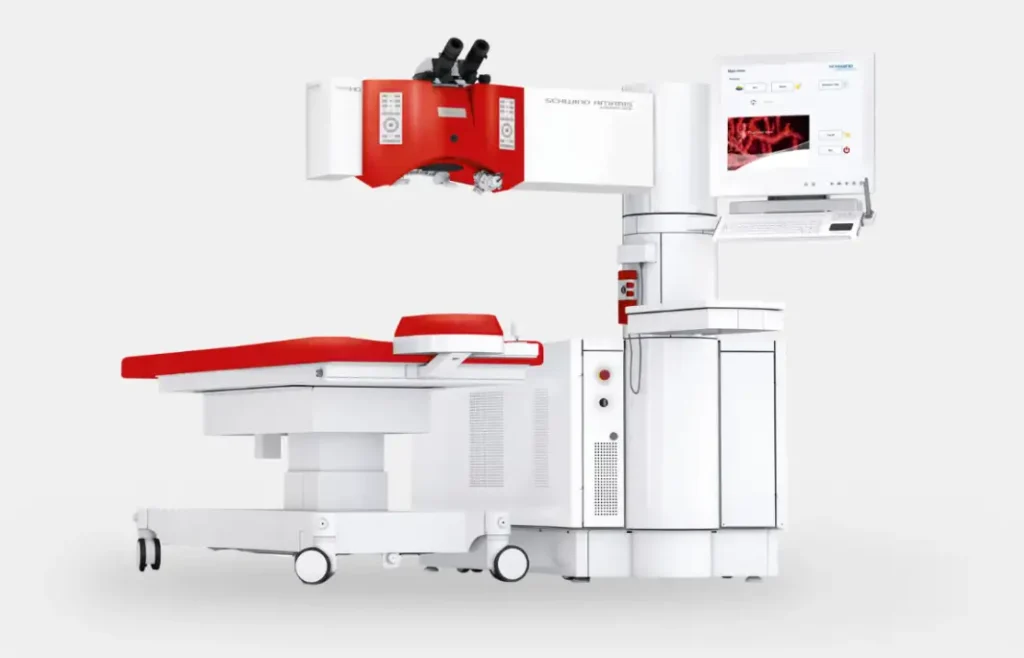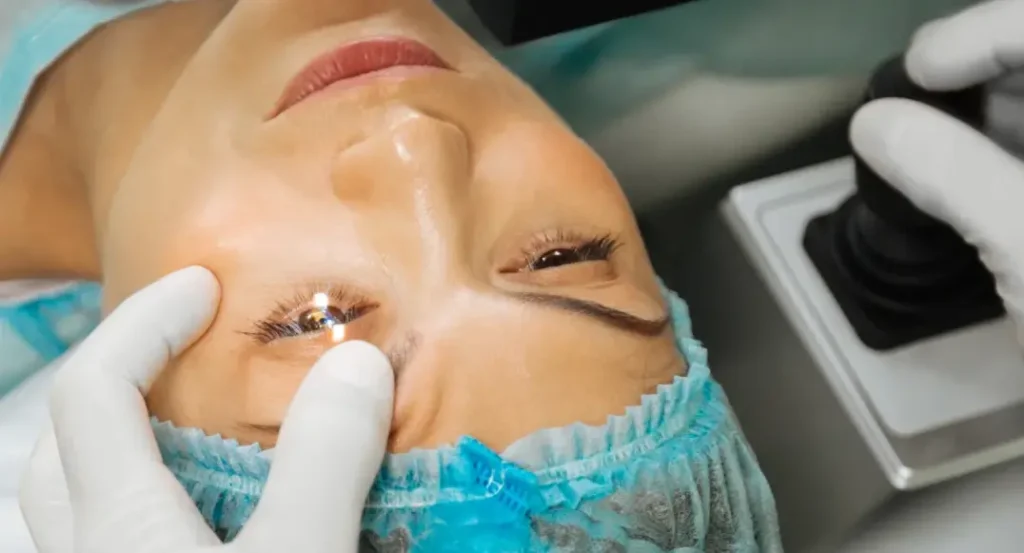

SMILE LASIK cost in Korea in 2026 generally ranges from approximately ₩2,000,000 to ₩3,500,000 for both eyes, while premium SMILE Pro treatment may cost more. Prices vary by clinic, laser technology, diagnostic testing, surgeon, and aftercare. International patients should confirm exactly what is included before booking.
koreaeyeclinic.com
For international patients considering vision correction in South Korea, the typical 2026 cost of SMILE LASIK for both eyes is approximately ₩2,000,000–₩3,500,000, although the final price varies by clinic, laser platform, diagnostic testing, surgeon, treatment complexity, and aftercare. Premium SMILE Pro packages can be higher; some 2026 Korean clinics publicly list prices around ₩3,900,000–₩4,600,000 for both eyes.
The important point is that the advertised surgical price is not always the same as the total cost of treatment. Before booking, international patients should confirm whether the quotation includes the comprehensive eye examination, corneal mapping, surgery, medications, follow-up visits, enhancement policy, and any additional treatment such as corneal strengthening. A current Korean international-patient price list, for example, lists SMILE LASIK at ₩3,000,000 and notes that corneal strengthening may be charged separately.
Table of Contents

What Is SMILE LASIK?
SMILE stands for Small Incision Lenticule Extraction. It is a laser vision-correction procedure primarily used to correct myopia, with or without astigmatism.
Unlike conventional LASIK, which creates a corneal flap and uses an excimer laser to reshape the exposed corneal tissue, SMILE uses a femtosecond laser to create a small disc-shaped piece of corneal tissue called a lenticule inside the cornea. The surgeon removes the lenticule through a small incision, changing the cornea’s shape and correcting the refractive error.
The FDA-approved VisuMax SMILE indication includes myopia from −1.00 to −10.00 diopters, astigmatism from −0.75 to −3.00 diopters, and patients aged 22 or older with stable refraction under the specified criteria. However, these figures should not be interpreted as a universal eligibility rule: the surgeon must evaluate the individual’s corneal anatomy, ocular surface, prescription, and overall eye health.
SMILE vs. LASIK vs. LASEK
| Procedure | Basic technique | Corneal flap | Typical consideration |
|---|---|---|---|
| SMILE | Removes an internal corneal lenticule through a small incision | No | Myopia/astigmatism; flap-free approach |
| LASIK | Excimer laser reshapes cornea beneath a flap | Yes | Broad refractive correction with rapid visual recovery |
| LASEK/PRK | Surface corneal tissue is treated and allowed to heal | No | May be considered when corneal or lifestyle factors make flap-based surgery less appropriate |
The “best” procedure is therefore not simply the newest or cheapest option. It is the procedure that provides an appropriate balance between refractive correction, corneal safety, ocular-surface health, lifestyle requirements, and long-term expectations.
How Much Does SMILE LASIK Cost in Korea in 2026?
Publicly available 2026 Korean clinic information shows meaningful variation in pricing.
A practical planning range is:
- Standard SMILE LASIK, both eyes: approximately ₩2,000,000–₩3,500,000
- Premium SMILE Pro, both eyes: approximately ₩3,900,000–₩4,600,000 at clinics publicly listing this range
- Pre-operative examination: may be included or billed separately
- Corneal strengthening: may be an additional charge where clinically indicated
- Medication: commonly included in some packages, but this must be confirmed
- Follow-up examinations: commonly included in international-patient packages, but policies differ
These figures are reference ranges, not a national fixed price. Korean ophthalmology clinics set their own fees, and the same procedure name does not necessarily represent identical diagnostic protocols, laser equipment, surgeon experience, or aftercare.
For example, one Korean eye center currently publishes a SMILE LASIK price of ₩3,000,000 and separately lists corneal strengthening at ₩500,000. Another 2026 source describes a broader international-patient SMILE range of ₩2,000,000–₩3,500,000 for both eyes.
Why Can Two Clinics Quote Different Prices?
A difference in price does not automatically mean a difference in medical quality.
The quotation can be affected by:
- Laser platform and generation
- Surgeon’s experience and specialization
- Depth and scope of pre-operative diagnostics
- Complexity of the prescription
- Whether both eyes are treated
- Whether postoperative medication is included
- Number of follow-up examinations
- International-patient coordination services
- Whether additional corneal treatment is required
- Whether the quoted price is promotional or standard
This is why patients should compare what is included, rather than comparing only the headline number.
What Is Usually Included in a Korea SMILE LASIK Package?
A reputable package for an international patient may include several stages of care.
1. Comprehensive Pre-Operative Eye Examination
This is arguably the most important part of the process.
Testing may evaluate:
- Uncorrected and corrected visual acuity
- Manifest and/or cycloplegic refraction
- Corneal thickness
- Corneal curvature
- Corneal topography or tomography
- Ocular surface and tear-film condition
- Pupil characteristics
- Intraocular pressure
- Retinal health
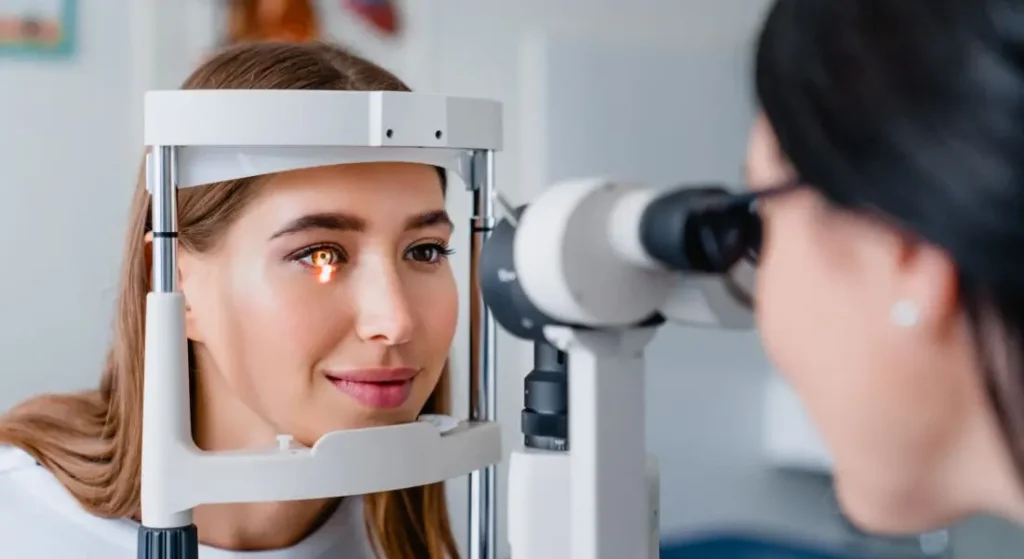
- Overall suitability for refractive surgery
The FDA specifically emphasizes evaluating factors such as corneal thickness and dry-eye status when considering refractive surgery.
2. Surgical Procedure
The quoted price should specify whether it covers both eyes.
This sounds obvious, but international patients should always confirm:
“Is this price for one eye or both eyes?”
They should also ask which exact procedure is being quoted: standard SMILE, SMILE Pro, LASIK, LASEK, or another refractive procedure.
3. Postoperative Medication
Depending on the clinic, the package may include prescription eye drops and other medication used during the recovery period.
Ask specifically:
- Which medications are included?
- For how many days?
- Are additional medications charged separately?
- Can equivalent medication be purchased locally after returning home?
4. Follow-Up Examinations
International patients should confirm the number and timing of postoperative visits.
A typical care pathway may include:
Surgery → early postoperative examination → short-term vision assessment → additional follow-up if necessary
The exact schedule depends on the surgeon and the patient’s recovery.
5. International Patient Support
Some Korean clinics provide English or multilingual coordination, appointment scheduling, interpretation, transportation coordination, or assistance with medical documentation.
These services are useful for overseas patients but should not be confused with medical treatment itself.
What May NOT Be Included?
Before paying a deposit or booking flights, request a written quotation that specifically addresses additional charges.
Potential exclusions include:
- Additional diagnostic tests
- Corneal strengthening
- Treatment of pre-existing dry eye
- Additional postoperative medication
- Enhancement or retreatment
- Treatment of complications
- Accommodation
- Flights
- Airport transfers
- Interpreter services
- Non-routine follow-up after returning home
For example, one Seoul international-patient price list explicitly identifies corneal strengthening as an additional item rather than including it in the SMILE LASIK price.
Who May Be a Candidate for SMILE?
SMILE is not appropriate for everyone who wants to stop wearing glasses.
The FDA patient information for the VisuMax system identifies factors that can make SMILE inappropriate or increase risk, including insufficient corneal tissue, abnormal corneal shape associated with thinning or keratoconus, unstable refractive error, severe dry eye, active eye infection or inflammation, certain autoimmune/connective-tissue conditions, uncontrolled diabetes, and uncontrolled glaucoma.
A proper consultation should therefore answer a more important question than:
“How much does SMILE cost?”
It should answer:
“Is SMILE medically appropriate for my eyes, and if not, what is the safer alternative?”
That distinction is particularly important for medical tourists who may be tempted to select a procedure before having a complete examination.
How to Prepare for SMILE LASIK in Korea
Step 1: Gather Your Eye History
Before contacting a Korean clinic, prepare:
- Current glasses prescription
- Previous contact-lens prescription
- Previous eye-surgery history
- Relevant medical history
- Current medications
- History of dry-eye symptoms
- Previous corneal problems
- Previous refractive-surgery consultations
If you have previous corneal topography or eye-examination records, bring copies.
Step 2: Check Contact Lens Requirements
Contact lenses can temporarily alter the shape of the cornea and may affect pre-operative measurements.
Your clinic should tell you how long to stop wearing your specific type of contact lens before the examination. The required period varies according to lens type and individual circumstances, so patients should follow the clinic’s instructions rather than relying on a generic number found online.
Step 3: Have a Complete Examination Before Surgery
Do not book surgery solely from an online prescription.
The final decision should be based on measurements obtained through an appropriate clinical examination. This is particularly important for patients with:
- High myopia
- Significant astigmatism
- Dry-eye symptoms
- Thin corneas
- Previous eye surgery
- Irregular corneal measurements
- Large pupils
- Ocular disease
Step 4: Ask for the Exact Procedure
“Laser eye surgery” is not a sufficiently precise description.
Ask whether your quotation is for:
- SMILE
- SMILE Pro
- LASIK
- LASEK/PRK
- ICL
Also ask which laser platform will be used and whether the quoted price can change after examination.
Step 5: Request an Itemized Quote
An ideal quotation should show:
| Cost item | Confirm before booking |
| Eye examination | Included / additional |
| Corneal mapping | Included / additional |
| SMILE procedure | Included |
| Both eyes | Confirm |
| Medication | Included / additional |
| Follow-up | Number of visits |
| Corneal strengthening | Included / additional |
| Enhancement | Policy explained |
| Interpreter | Included / additional |
| Transportation | Included / additional |
This prevents the common problem of comparing one clinic’s “surgery-only” price with another clinic’s all-inclusive package.
How Long Should International Patients Stay in Korea?
The medical schedule varies according to the clinic, procedure, and recovery.
A patient traveling internationally should avoid creating an itinerary that assumes the surgery will automatically be completed on the first visit.
A more prudent sequence is:
Arrival → examination → eligibility decision → surgery → postoperative examination → return home
The reason is simple: the examination may determine that SMILE is not the most appropriate procedure.
International patients should also avoid scheduling important activities immediately after surgery. Vision can fluctuate during the early recovery period, and postoperative instructions should take priority over sightseeing, work, or travel plans.
What Are the Risks of SMILE?
SMILE is an established refractive procedure, but it is still surgery and does not guarantee perfect vision.
Potential complications and side effects can include:
- Dry eye
- Fluctuating vision
- Glare
- Halos
- Difficulty with night vision
- Residual or induced astigmatism
- Under-correction or over-correction
- Regression
- Need for glasses or contact lenses
- Need for additional treatment
- Corneal complications, including ectasia in susceptible patients
The FDA emphasizes that refractive surgery can result in visual symptoms, dry eye, under- or over-correction, and, in some cases, loss of vision. It also specifically warns patients against interpreting promotional packages or guarantees as evidence of guaranteed medical outcomes.
Therefore, a clinic advertising “20/20 guaranteed” should not automatically be considered safer than a clinic that provides a more balanced discussion of potential outcomes.
What Does Recovery Usually Involve?
SMILE is generally designed as a minimally invasive corneal procedure with a small incision rather than a LASIK flap.
However, fast recovery does not mean instantaneous recovery.
Patients may experience:
- Blurred or fluctuating vision initially
- Light sensitivity
- Dryness or irritation
- Temporary visual disturbances
- Gradual stabilization of vision
The actual recovery timeline differs between patients. Your surgeon should provide individualized postoperative instructions and tell you when it is appropriate to drive, exercise, swim, use cosmetics around the eyes, and return to work.
Is SMILE LASIK Worth the Cost in Korea?
For international patients, the strongest reason to consider Korea should not be simply the possibility of paying less.
The more meaningful comparison is:
Total cost + diagnostic quality + surgeon expertise + technology + postoperative care + convenience
A lower advertised price can become less attractive if important diagnostic testing, medication, follow-up, or additional treatment is excluded.
Conversely, a higher quotation may represent a more comprehensive package with extensive diagnostics and postoperative care.
The objective should therefore be to find the best-supported treatment plan for your eyes, rather than the lowest advertised price.
A Practical 2026 Budget for International Patients
For initial planning, an international patient can separate expenses into two categories.
Medical budget
Approximately ₩2,000,000–₩3,500,000 for standard SMILE LASIK for both eyes is a reasonable publicly reported 2026 reference range, while premium SMILE Pro packages may be around ₩3,900,000–₩4,600,000 at clinics publicly advertising those prices.
Travel budget
Add separately for:
- Round-trip airfare
- Hotel
- Local transportation
- Meals
- Travel insurance
- Additional medical visits
- Interpreter or coordination services, if required
- Extra nights if the surgeon recommends additional observation
The total trip cost can therefore be substantially higher than the surgical quotation alone.
10 Questions to Ask a Korean Eye Clinic Before Booking
- Is the quoted SMILE price for one eye or both eyes?
- Is the pre-operative examination included?
- Which diagnostic tests are performed before surgery?
- Which laser platform is used?
- Is this standard SMILE or SMILE Pro?
- Are medications included?
- How many postoperative examinations are included?
- Is corneal strengthening included if medically necessary?
- What happens if I am found unsuitable for SMILE after arriving in Korea?
- What is the policy for residual prescription or enhancement treatment?
The tenth question is particularly important. Patients should understand in advance that refractive surgery does not guarantee that glasses will never be needed again.
FAQs
How much does SMILE LASIK cost in Korea in 2026?
The SMILE LASIK cost in Korea 2026 generally ranges from approximately ₩2,000,000 to ₩3,500,000 for both eyes, although prices vary by clinic, laser platform, surgeon, diagnostic testing, and postoperative care. SMILE Pro Korea cost may be higher depending on the technology and treatment package.
What is included in the SMILE LASIK Korea price?
The SMILE LASIK Korea price may include a comprehensive eye examination, corneal mapping, the laser procedure, prescription eye drops, and postoperative follow-up visits. However, inclusions differ between clinics. International patients should request an itemized quotation and confirm whether additional testing, medications, corneal strengthening, or enhancement treatment costs extra.
Is SMILE Pro more expensive than standard SMILE LASIK in Korea?
In many Korean clinics, SMILE Pro Korea cost is higher than standard SMILE because it uses newer laser technology and may be offered as a premium treatment package. However, a higher price does not automatically mean that SMILE Pro is medically better for every patient. An ophthalmologist should determine which procedure is appropriate after a detailed eye examination.
How should international patients prepare for SMILE LASIK in Korea?
Before undergoing eye surgery in Korea for foreigners, international patients should provide their current prescription and eye-health history, follow the clinic’s instructions regarding contact-lens use, arrange a comprehensive pre-operative examination, and confirm the surgery and follow-up schedule. Patients should also verify the total treatment price before booking flights or accommodation.
Is SMILE LASIK in Korea worth the cost for international patients?
SMILE LASIK in Korea can be an attractive option for international patients seeking advanced laser vision correction, but price should not be the only consideration. Compare the SMILE LASIK Korea price, diagnostic testing, surgeon qualifications, laser technology, postoperative care, and enhancement policy. The most appropriate procedure should ultimately be determined by an ophthalmologist based on your individual eye condition.
Key Takeaway
SMILE LASIK in Korea in 2026 generally costs about ₩2,000,000–₩3,500,000 for both eyes based on publicly available clinic pricing, while premium SMILE Pro treatment can cost approximately ₩3,900,000–₩4,600,000 at some clinics. The exact price depends on the patient’s prescription, corneal condition, diagnostic requirements, technology, surgeon, and package structure.
For international patients, the smartest approach is to compare itemized treatment packages rather than headline prices. Confirm the examination, procedure, medications, postoperative visits, additional-treatment policies, and international-patient services before booking travel.
Most importantly, cost should come after medical suitability. A comprehensive eye examination is essential because corneal thickness, corneal shape, tear-film health, prescription stability, and other ocular factors can determine whether SMILE is appropriate at all.
References
- LASIK Surgery: What Are the Risks and How Can I Find the Right Doctor?
Provides authoritative information on LASIK risks, patient expectations, doctor selection, and potential complications.
FDA — LASIK Surgery Risks and Choosing a Doctor - LASIK Surgery Checklist
Covers important considerations before undergoing laser vision correction, including patient suitability and questions to discuss with a surgeon.
FDA — LASIK Surgery Checklist