
SMART SMILE LASIK is a minimally invasive, next-generation laser eye surgery that corrects vision by removing a microscopic lenticule from the cornea through a small incision—without creating a flap. Compared to traditional LASIK, it offers better corneal stability, reduced dry eye risk, and faster functional recovery, making it one of the safest and most advanced refractive procedures available in 2026.
BSM Eye Care Clinic in Gangnam
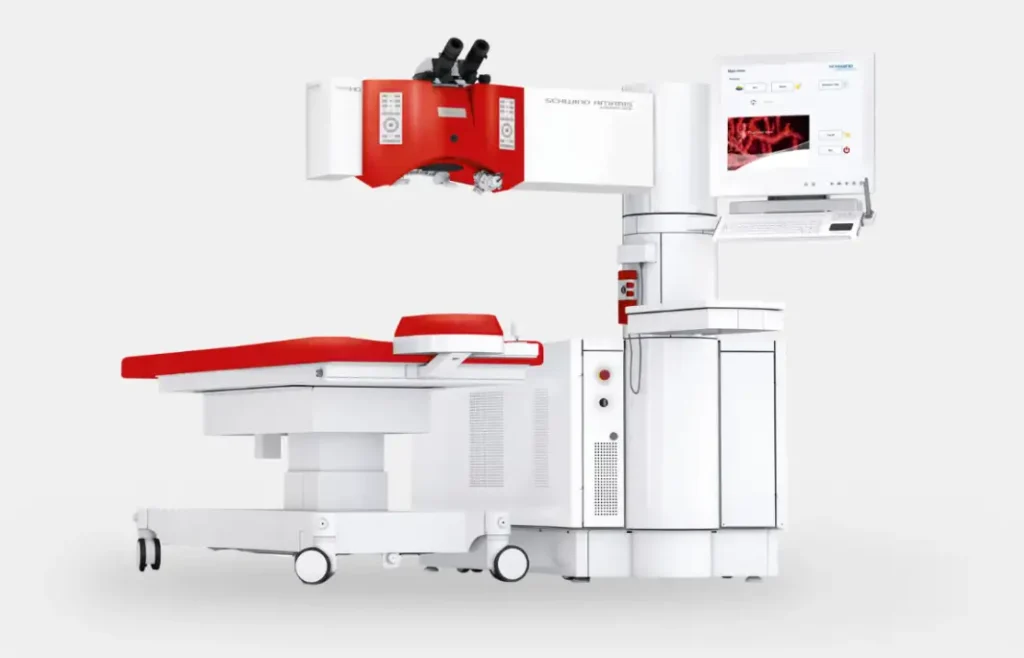
In global medical hubs like Gangnam, Seoul, patients benefit from high surgical volumes, advanced femtosecond laser systems, and standardized pre-operative diagnostics, which collectively contribute to consistently strong clinical outcomes.
SMART SMILE LASIK represents a clinically validated evolution in refractive surgery, combining:
- Minimal invasiveness
- Strong biomechanical preservation
- Reliable visual outcomes
For patients seeking vision correction in Gangnam, the combination of advanced surgical infrastructure, experienced ophthalmologists, and competitive pricing makes it one of the most compelling destinations globally. However, the most critical factor remains proper patient selection and thorough pre-operative evaluation—these determine outcomes more than the technology alone.
Table of Contents

What Is SMART SMILE LASIK?
SMART SMILE (Small Incision Lenticule Extraction) is a laser refractive surgery designed to correct:
- Myopia (nearsightedness)
- Astigmatism
- Selected cases of hyperopia
Core Mechanism
Instead of reshaping the cornea by lifting a flap (as in LASIK), SMILE:
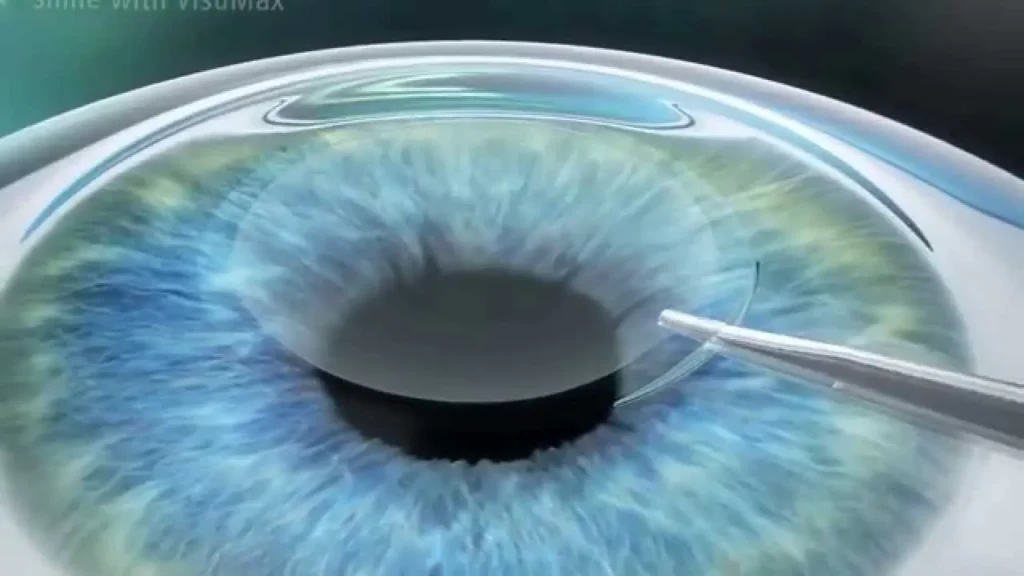
- Uses a femtosecond laser to create a thin, lens-shaped tissue (lenticule) within the cornea
- Removes the lenticule through a small incision (2–4 mm)
- Changes the corneal curvature to correct refractive error
👉 SMART SMILE LASIK = flapless, minimally invasive laser eye surgery using small-incision lenticule extraction to reshape the cornea.
Why SMART SMILE LASIK Is Considered Safer in 2026
Advances in laser precision, imaging, and surgical planning have significantly improved safety outcomes.
Evidence-Based Safety Advantages
1. No Corneal Flap Creation
- Eliminates flap-related complications (displacement, wrinkles)
- Particularly beneficial for athletes or active lifestyles
2. Preservation of Corneal Biomechanics
- Maintains structural integrity
- Reduces risk of post-surgical ectasia (a rare but serious complication)
3. Lower Incidence of Dry Eye
- Less disruption of corneal nerves
- Supported by multiple ophthalmology studies comparing SMILE vs LASIK
4. Reduced Infection Exposure
- Smaller incision = lower surface exposure
How SMART SMILE LASIK Works (Step-by-Step Process)
Preoperative Phase
- Comprehensive eye exam (corneal thickness, topography, tear film)
- Wavefront or AI-assisted customization
- Screening for contraindications (e.g., keratoconus)
Surgical Procedure
- Laser Mapping
High-precision femtosecond laser maps corneal layers - Lenticule Formation
A micro-lens is created inside the cornea - Micro-Incision (2–4 mm)
Minimal disruption to corneal surface - Lenticule Extraction
Surgeon removes the tissue through the incision - Immediate Vision Correction
No flap repositioning required
SMILE vs LASIK vs PRK (Clinical Comparison)
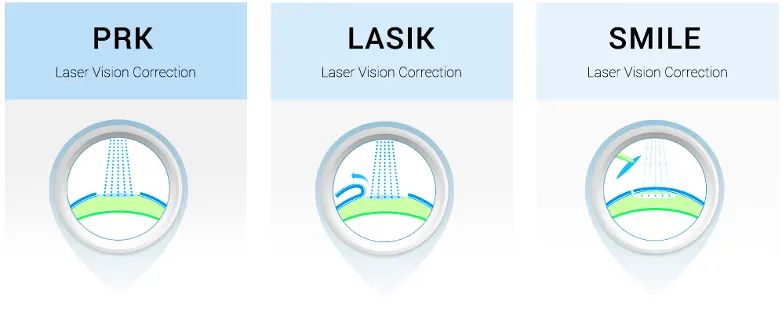
| Feature | SMART SMILE | LASIK | PRK |
|---|---|---|---|
| Surgical Approach | Flapless | Flap-based | Surface ablation |
| Incision Size | 2–4 mm | ~20 mm | None |
| Dry Eye Risk | Lower | Moderate | Low |
| Recovery Speed | Fast | Very fast | Slower |
| Corneal Strength | High preservation | Reduced | High |
| Suitability for Active Lifestyles | Excellent | Moderate | Good |
👉 Key takeaway:
SMILE provides a balance between safety (like PRK) and fast recovery (like LASIK).
Who Is a Good Candidate for SMART SMILE LASIK?
Ideal Candidates
- Adults aged 18–45
- Stable prescription for ≥1 year
- Mild to high myopia (-1.00 to -10.00 D typically)
- Active or screen-heavy lifestyle
Not Suitable If You Have:
- Keratoconus or irregular cornea
- Severe dry eye syndrome
- Autoimmune disorders affecting healing
- Uncontrolled diabetes
👉 Proper screening is critical—outcomes depend more on patient selection than the procedure itself.
Risks and Limitations
Although SMILE is considered safe, no surgical procedure is risk-free.
Potential Side Effects
- Temporary visual disturbances (halos, glare)
- Mild undercorrection or overcorrection
- Transient dryness
- Rare infection or inflammation
Clinical Insight
Peer-reviewed studies (e.g., Journal of Refractive Surgery, Ophthalmology) report:
- >95% patient satisfaction rates
- Comparable or lower complication rates vs LASIK
Recovery Timeline: What Patients Actually Experience
First 24 Hours
- Mild discomfort, light sensitivity
- Vision begins improving within hours
2–3 Days
- Functional vision returns
- Most patients resume work
1–2 Weeks
- Vision stabilizes significantly
- Minimal restrictions
1–3 Months
- Full visual clarity and neural adaptation
Real-World Clinical Scenario
A 29-year-old professional working long hours on digital screens in Seoul presented with:
- Myopia: -6.00 D
- Chronic dryness from screen exposure
Outcome After SMILE:
- Achieved 20/20 vision within 1 week
- Reported significantly פחות dry eye symptoms than expected with LASIK
- Returned to work in 48 hours
👉 This aligns with current clinical preference:
SMILE is often recommended for patients with digital lifestyle strain.
Cost of SMART SMILE LASIK in Seoul (2026)
| Region | Average Cost (Both Eyes) |
|---|---|
| South Korea | $1,500 – $3,000 |
| USA | $4,000 – $6,000 |
| Europe | $3,500 – $5,500 |
What Affects Cost?
- Surgeon expertise
- Technology generation (latest femtosecond systems)
- Pre- and post-operative care inclusion
Why Gangnam, Seoul Is a Global Leader in SMILE LASIK
Gangnam has developed a strong reputation in ophthalmology due to:
1. High Surgical Volume
- Surgeons often perform thousands of procedures annually
- Improves precision and consistency
2. Advanced Technology Adoption
- Early adoption of next-gen femtosecond lasers
- Integration of AI diagnostics
3. Structured Medical Systems
- Standardized screening protocols
- Strong infection control practices
4. International Patient Support
- Multilingual services
- Medical tourism coordination
How to Choose the Right SMILE LASIK Clinic
Evidence-Based Checklist
- Board-certified ophthalmologist
- Extensive SMILE-specific experience (1000+ cases recommended)
- Access to latest laser systems
- Transparent complication management protocol
- Detailed pre-operative diagnostics
FAQs
What is SMART SMILE LASIK and how is it different from LASIK?
SMART SMILE LASIK is a minimally invasive laser eye surgery that corrects vision by removing a small lenticule through a tiny incision, without creating a corneal flap. Unlike traditional LASIK, it preserves more corneal strength and typically results in less dry eye.
Is SMART SMILE LASIK safe?
Yes. Clinical studies show that SMART SMILE LASIK has a high safety profile with over 95% patient satisfaction. It reduces flap-related complications and lowers the risk of dry eye compared to LASIK when performed by experienced surgeons.
How long does recovery take after SMILE LASIK?
Most patients experience functional vision within 24–48 hours and return to daily activities within 2–3 days. Full visual stabilization typically occurs within 1 to 3 months.
How much does SMART SMILE LASIK cost in Seoul?
The average cost ranges from $1,500 to $3,000 for both eyes, depending on the clinic, surgeon experience, and technology used. This is generally more affordable than in the US or Europe.
Who is a good candidate for SMART SMILE LASIK?
Ideal candidates are adults with stable vision, mild to high myopia, and healthy corneas. A detailed eye exam is required to confirm eligibility, as conditions like keratoconus or severe dry eye may disqualify patients.