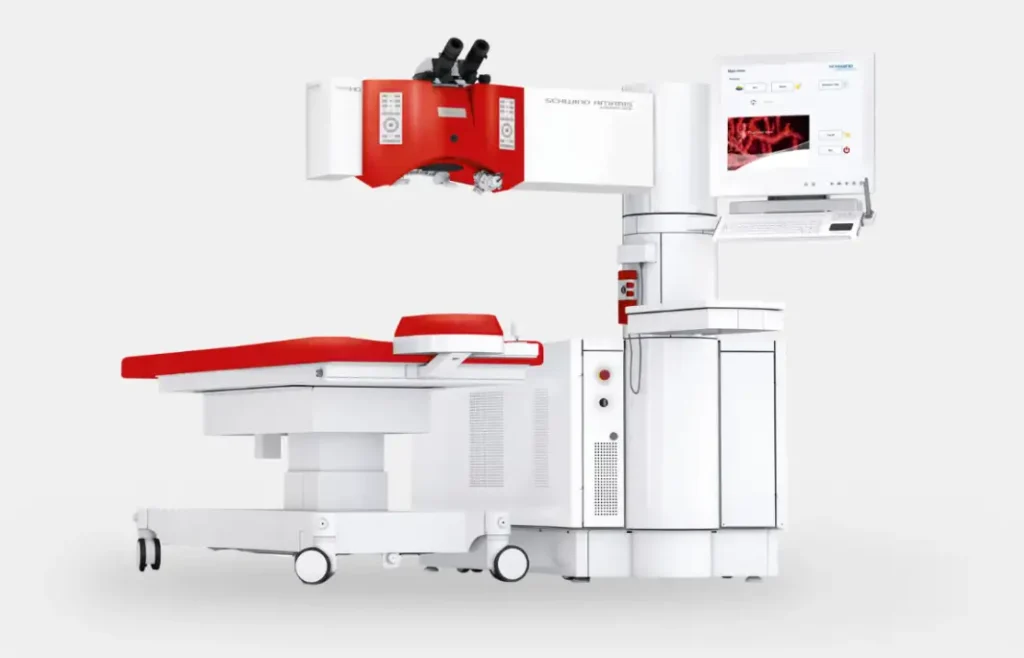

SILK SMILE LASIK in Seoul is a minimally invasive laser eye surgery that corrects myopia and astigmatism through a small corneal incision without creating a flap. It preserves corneal stability, reduces dry eye risk, and offers fast visual recovery, making it a leading 2026 vision correction option in Korea.
BSM Eye Care Clinic in Gangnam
SILK SMILE LASIK in Seoul is a minimally invasive laser eye surgery that corrects myopia and astigmatism by reshaping the cornea through a small incision without creating a traditional flap. Using advanced femtosecond laser technology, this procedure removes a precise lenticule of corneal tissue to improve how light focuses on the retina. In 2026, Seoul has become a leading destination for SILK SMILE LASIK due to high surgical volumes, refined diagnostic screening systems, and experienced refractive specialists.
For patients asking, “Is SILK SMILE LASIK safer or better than LASIK?” — the answer depends on corneal structure, refractive degree, and lifestyle needs. SILK SMILE LASIK is considered less invasive than traditional LASIK because it preserves more corneal biomechanics and typically causes fewer dry eye symptoms, while still delivering excellent visual outcomes when performed on appropriate candidates.
Table of Contents

What Is SILK SMILE LASIK?
Definition
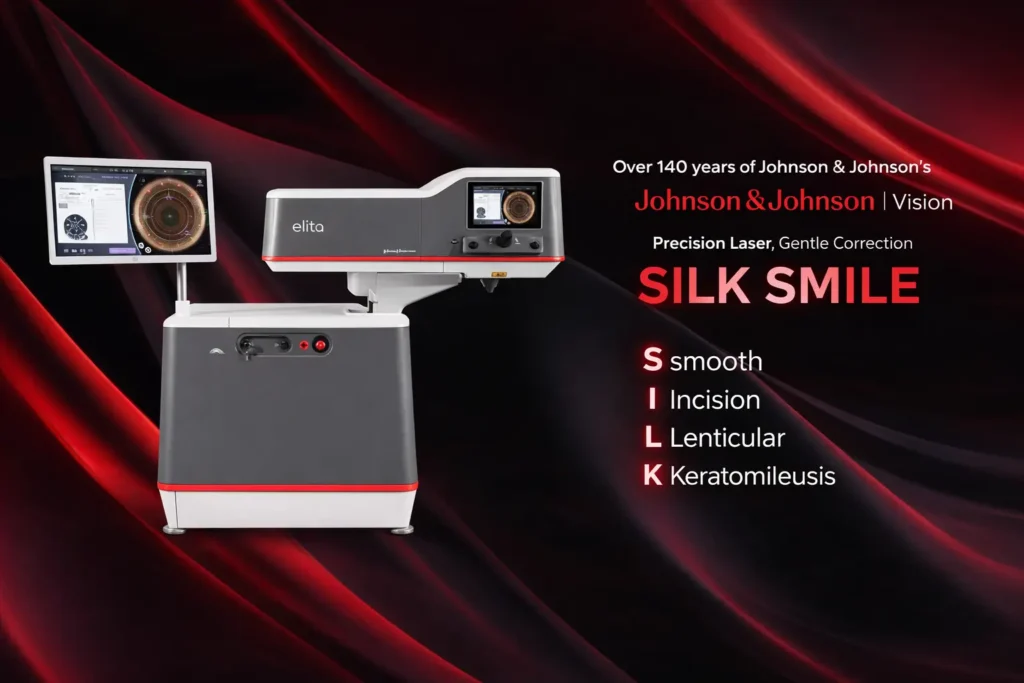
Silk SMILE (Small Incision Lenticule Extraction) is a flapless refractive laser procedure that uses a femtosecond laser to:
- Create a thin disc-shaped piece of tissue (lenticule) within the cornea
- Remove that lenticule through a 2–4 mm micro-incision
- Reshape the cornea to correct refractive error
Unlike traditional LASIK, SILK SMILE LASIK does not require creating a large corneal flap.
Conditions Treated
Silk SMILE in Seoul is primarily used to treat:
- Myopia (nearsightedness)
- Myopic astigmatism
Some centers also treat selected cases of mild hyperopia, depending on platform availability and surgeon expertise.
Why Seoul Is a Major Center for SILK SMILE LASIK in 2026
Seoul is internationally recognized for:
- High procedural volume in refractive surgery
- Advanced corneal imaging (Scheimpflug tomography, epithelial mapping)
- Structured preoperative screening protocols
- Multilingual medical coordination for international patients
High surgical volume correlates with refined technique and better complication management. However, the most important factor remains surgeon experience and patient selection, not geographic location alone.
How SILK SMILE LASIK Works: Mechanism Explained
Refractive errors occur when the cornea bends light incorrectly, causing images to focus in front of or behind the retina.
SILK SMILE LASIK corrects this by:
- Removing a precisely calculated lenticule
- Flattening the central cornea
- Adjusting refractive power to restore proper focus
Because the anterior corneal surface remains largely intact, corneal nerves are less disrupted compared to flap-based LASIK procedures.
Step-by-Step Procedure

1. Comprehensive Preoperative Evaluation
A thorough exam includes:
- Refraction testing (manifest and cycloplegic)
- Corneal topography and tomography
- Pachymetry (corneal thickness)
- Tear film assessment
- Pupil size measurement
- Retinal examination
Patients with keratoconus, unstable prescriptions, or severe dry eye are excluded.
2. Surgical Day
- Topical anesthetic drops are applied
- Femtosecond laser creates the lenticule (about 20–30 seconds)
- A micro-incision (2–4 mm) is made
- The lenticule is gently extracted
Total procedure time per eye is typically under 10 minutes.
Recovery Timeline
Day 1:
Vision improves significantly; mild haze possible.
Week 1:
Functional vision stable; most patients resume work.
1 Month:
Improved clarity and contrast sensitivity.
3–6 Months:
Full neural adaptation and visual stabilization.
Compared to traditional LASIK, patients often report:
- Less dryness
- Less foreign body sensation
- Stable early recovery
Clinical Outcomes
Peer-reviewed studies published in refractive surgery journals and supported by organizations such as the American Academy of Ophthalmology show:
- Over 90% of properly selected patients achieve 20/20 or better
- High predictability in moderate myopia
- Stable long-term outcomes
- Reduced dry eye incidence compared to flap LASIK
Enhancement rates remain low but possible.
Outcome quality depends heavily on:
- Preoperative screening
- Corneal thickness
- Refractive degree
- Surgeon experience
Advantages of SILK SMILE LASIK
1. Minimally Invasive
Small incision without a large corneal flap.
2. Better Biomechanical Stability
More anterior corneal fibers remain intact.
3. Lower Dry Eye Risk
Less corneal nerve disruption.
4. Reduced Flap Complications
No risk of flap displacement from trauma.
Limitations
SILK SMILE LASIK may not be ideal for:
- Very high hyperopia
- Thin corneas below safe residual stromal thresholds
- Irregular corneal topography
- Patients requiring extensive wavefront customization
In some cases, wavefront-guided LASIK may offer superior correction for higher-order aberrations.
SILK SMILE LASIK vs Traditional LASIK vs PRK
| Feature | SILK SMILE LASIK | LASIK | PRK |
|---|---|---|---|
| Flap | No | Yes | No |
| Incision Size | 2–4 mm | 20 mm flap | Surface removal |
| Dry Eye Risk | Lower | Moderate | Moderate |
| Recovery Speed | Fast | Fast | Slower |
| Pain | Minimal | Minimal | More discomfort |
Each procedure has specific indications.
Real-World Case Example
A 26-year-old software engineer in Seoul with:
- -6.00D myopia
- -1.00D astigmatism
- Normal corneal thickness (550 microns)
- Mild contact lens intolerance
Underwent SILK SMILE LASIK:
- Day 1: 20/25 vision
- Week 1: 20/20
- 3 months: Stable 20/16
Reported significantly less dryness compared to prior contact lens use.
Not all patients achieve 20/16; expectations must be individualized.
Risks and Complications
Even minimally invasive surgery carries risks.
Temporary
- Light sensitivity
- Mild dryness
- Night halos
Rare
- Undercorrection
- Infection
- Interface inflammation
Serious complications are uncommon when proper screening is followed.
Who Is an Ideal Candidate?
Good candidates for SILK SMILE LASIK in Seoul:
- Age 19–45
- Stable prescription for 1+ year
- Moderate to high myopia
- Adequate corneal thickness
- No progressive corneal disease
A detailed evaluation determines candidacy.
Cost Considerations in Seoul (2026)
Pricing varies depending on:
- Diagnostic testing depth
- Surgeon expertise
- Clinic technology platform
- Postoperative care inclusion
Patients should evaluate value based on safety protocols and surgeon experience—not price alone.
Long-Term Expectations
SILK SMILE LASIK does not prevent:
- Presbyopia
- Cataract formation
However, it significantly reduces dependency on glasses for distance vision.
Long-term stability is strong when corneal biomechanics are preserved and screening protocols are strict.
Final Expert Perspective (2026 Standard)
SILK SMILE LASIK in Seoul represents a refined, minimally invasive evolution of laser vision correction. It offers:
- Excellent visual outcomes
- Reduced dry eye risk
- Strong biomechanical preservation
The most critical factor remains comprehensive screening and surgeon expertise. When performed on appropriate candidates, SILK SMILE LASIK provides safe, predictable, and long-term visual improvement.
Patients should undergo a full refractive consultation to determine whether SILK SMILE LASIK, LASIK, or PRK is the safest and most effective option for their eyes.
FAQs
What is SILK SMILE LASIK in Gangnam,Seoul?
SILK SMILE LASIK in Seoul is a minimally invasive laser eye surgery Korea procedure that removes a small corneal lenticule through a micro-incision to correct myopia and astigmatism without creating a traditional flap.
Is SILK SMILE LASIK safer than traditional LASIK?
SILK SMILE LASIK in Seoul is considered flapless LASIK Seoul technology, which preserves more corneal structure and may reduce dry eye symptoms compared to conventional flap-based LASIK, depending on patient eligibility.
How much does SILK SMILE LASIK cost in Gangnam, Seoul?
The SMILE eye surgery cost Seoul varies depending on diagnostic testing, surgeon experience, and clinic technology. A full preoperative evaluation determines final pricing and candidacy.
How long is recovery after SILK SMILE LASIK in Gangnam, Seoul?
Most patients undergoing SILK SMILE LASIK in Seoul experience functional vision within 1–3 days. Because it is a minimally invasive laser eye surgery Korea procedure, recovery is typically fast with less surface discomfort.
Who is a good candidate for SILK SMILE LASIK in Gangnam, Seoul?
Ideal candidates for SILK SMILE LASIK in Seoul are adults with stable myopia or astigmatism, healthy corneas, and sufficient thickness for flapless LASIK Seoul treatment after comprehensive screening.