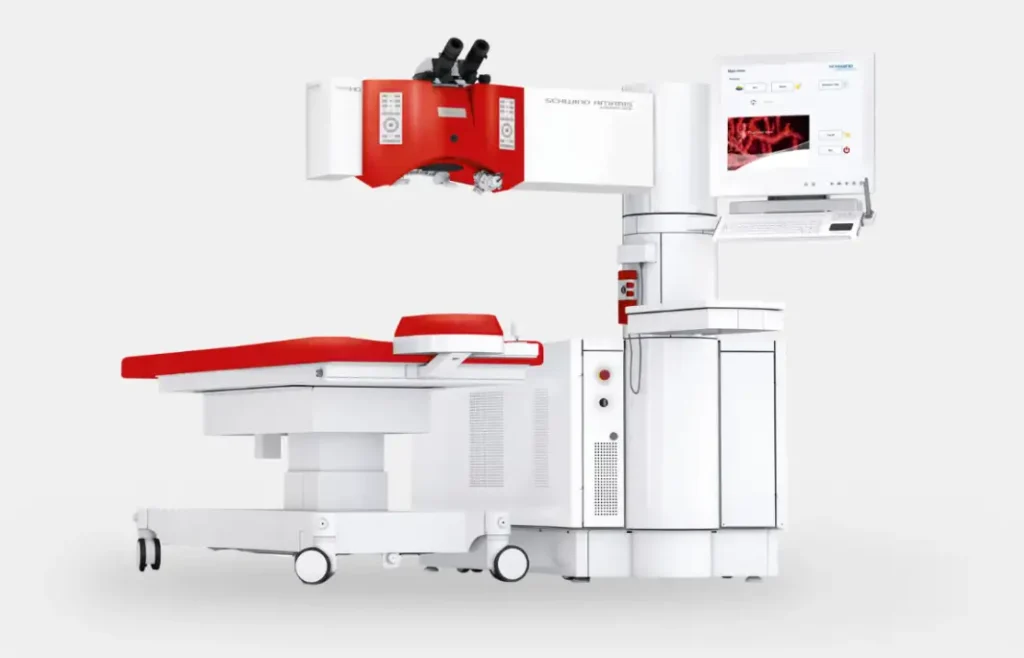

Most international patients should plan about 3–5 days in Seoul for LASIK or SMILE PRO and around 5–7 days or longer for LASEK. The exact stay depends on your eye examination, procedure, healing, and postoperative follow-up. Always confirm your return-flight timing with your ophthalmologist before traveling.
koreaeyeclinic.com
If you are traveling to Seoul specifically for vision correction, plan for at least 3–5 days in Korea for many LASIK or SMILE PRO patients, while LASEK generally deserves a longer stay because the surface of the cornea needs more time to heal. However, there is no single safe number of days for everyone. Your actual schedule should be based on the preoperative examination, procedure selected, postoperative findings, and ophthalmologist’s advice.
For international patients, the safest approach is to plan the trip around the medical timeline rather than fitting surgery into a sightseeing itinerary. A typical sequence is examination and consultation → eligibility decision → surgery → postoperative examination → travel home. Korea Eye Clinic/BSM Eye Clinics currently describes a common international-patient pathway in which examination occurs first, surgery may follow, and postoperative assessment is performed before departure.
Table of Contents

How Many Days Should You Stay?
| Procedure | Practical Seoul planning window* | Main reason |
|---|---|---|
| SMILE PRO | 3–5 days | Fast functional recovery, but postoperative assessment is still important |
| LASIK | 3–5 days | Rapid visual recovery, with early postoperative monitoring |
| LASEK | 5–7+ days | Slower surface healing and more gradual visual recovery |
| If eligibility is uncertain | Add extra flexibility | Surgery may be postponed or another procedure recommended |
*These are travel-planning ranges, not medical clearance periods. Korea Eye Clinic currently states that many international SMILE PRO patients stay 3–7 days, allowing time for examination, surgery, and postoperative follow-up.
The important distinction is that being able to see reasonably well is not the same as being medically ready to travel. Your ophthalmologist should determine when you can safely leave Korea.
Why International Patients Need More Than One Day
Laser vision correction itself is relatively quick. The time-consuming part for an international patient is often the diagnostic and postoperative process.
A comprehensive examination can take up to about two hours at Korea Eye Clinic/BSM Eye Clinics and may include visual acuity, corneal evaluation, retinal assessment, pupil measurements, and other tests used to determine surgical suitability. The clinic also gives specific contact-lens discontinuation instructions before examination, depending on the type of lens worn.
This means an overseas patient should not think:
“The surgery only takes 10–20 minutes, so I can fly to Seoul for one day.”
That approach leaves no practical margin if:
- your examination takes longer than expected;
- your prescription or corneal measurements require further evaluation;
- dry eye needs to be addressed;
- you are not a candidate for the procedure you requested;
- the surgeon recommends a different procedure;
- postoperative vision needs additional assessment;
- your recovery is slower than expected.
For medical tourism, flexibility is part of good planning.
A Typical International Patient Timeline in Seoul
For a suitable patient whose examination and surgery proceed as planned, a practical itinerary can look like this.
Day 1: Comprehensive Eye Examination
Your first priority should be the eye examination—not surgery.
The ophthalmology team may assess:
- Current prescription
- Visual acuity
- Corneal thickness
- Corneal topography or tomography
- Ocular surface and tear-film condition
- Intraocular pressure
- Retinal health
- Pupil characteristics
- Previous eye surgery
- Medical and medication history
These measurements help determine whether laser vision correction is appropriate and, if so, which procedure best fits your eyes.
Korea Eye Clinic states that its comprehensive preoperative assessment can take up to two hours and is designed to determine eligibility and the appropriate surgical method.
Why this day matters
You may arrive in Seoul expecting SMILE PRO but discover that:
- LASIK is more appropriate;
- LASEK is preferable;
- ICL should be considered for your prescription;
- dry eye needs treatment first;
- additional testing is necessary;
- refractive surgery should not be performed.
That is why the consultation should come before committing to the procedure.
Day 2: Surgery
If your examination confirms that you are an appropriate candidate, surgery may be scheduled after the consultation.
Korea Eye Clinic’s published international-patient pathway describes a model in which examination occurs first and vision-correction surgery can follow on a subsequent day.
The actual procedure is much shorter than the overall medical appointment.
For SMILE-type procedures, the laser treatment itself may take only minutes, but preparation, anesthesia, positioning, postoperative examination, and instructions make the overall visit longer.
After surgery, you should expect your vision to be different from normal.
Depending on the procedure, early symptoms can include:
- blurred or hazy vision;
- light sensitivity;
- tearing;
- dryness;
- irritation;
- foreign-body sensation;
- glare or halos.
The FDA advises LASIK patients to expect temporary blurry or hazy vision and other symptoms during the early postoperative period, and recommends a postoperative examination within 24–48 hours.
Day 3: First Postoperative Examination
For international patients, this is one of the most important days.
The ophthalmologist can evaluate:
- Visual acuity
- Corneal healing
- Ocular surface
- Signs of inflammation
- Possible complications
- Medication response
- Whether recovery is progressing as expected
If everything looks appropriate, the doctor can provide individualized instructions for the remainder of your recovery and travel.
This is why a 3-day trip is a minimum-style planning scenario rather than a guarantee.
If your flight is booked for the morning immediately after surgery, you may not have enough flexibility for appropriate postoperative assessment.
SMILE PRO: How Long Should You Stay in Seoul?
SMILE PRO is generally associated with relatively rapid visual recovery compared with surface-ablation procedures such as LASEK.
Korea Eye Clinic’s current international-patient guidance states that many patients undergoing SMILE PRO should plan to remain in Korea for 3–7 days, allowing time for examination, surgery, and at least one postoperative follow-up visit.
Its current comparison guide gives a typical sequence of:
Day 1: Examination and consultation
Day 2: Surgery
Day 3: First postoperative examination
Additional follow-up may be recommended depending on recovery.
The clinic’s broader vision-correction guidance says many patients notice functional vision within one or two days after SMILE, although visual stabilization can continue beyond that period.
A practical SMILE PRO itinerary
Recommended planning approach:
- Day 1: Examination
- Day 2: SMILE PRO
- Day 3: Postoperative check
- Day 4–5: Buffer/recovery
- Day 5+: Consider return home if medically cleared
The extra days are valuable because they give you flexibility rather than forcing you to travel according to a rigid schedule.
LASIK: How Many Days Do You Need?
LASIK usually has a rapid functional recovery, but international patients should still plan for postoperative evaluation.
The American Academy of Ophthalmology’s EyeWiki notes that many LASIK patients have useful vision within one day, while refractive stabilization can continue for months.
The FDA recommends a postoperative visit within the first 24–48 hours and explains that patients may need a few days away from work while early symptoms settle.
Practical Seoul itinerary for LASIK
A reasonable planning model is:
Day 1: Examination and consultation
Day 2: LASIK
Day 3: Postoperative examination
Day 4–5: Recovery and travel buffer
For some patients, this may be more time than medically necessary. For others, additional follow-up may be appropriate.
The important point is that rapid visual recovery does not equal complete biological stabilization.
LASEK: Why You May Need a Longer Stay
LASEK is different.
Unlike LASIK, which creates a corneal flap, LASEK is a surface-ablation procedure. The corneal epithelium needs to heal after treatment.
The American Academy of Ophthalmology’s EyeWiki explains that LASEK typically involves a protective contact lens that remains in place until re-epithelialization, commonly around three or four days.
Korea Eye Clinic’s current Today LASEK information says patients commonly experience gradual vision improvement over the first several days, with clearer and more stable vision developing over one to two weeks; full visual recovery can take longer depending on individual healing.
Practical LASEK itinerary
For an overseas patient, a more conservative planning model is:
Day 1: Examination
Day 2: LASEK
Day 3–4: Early healing
Day 5–7: Follow-up and travel assessment
After returning home: Continued prescribed care and monitoring
This does not mean every LASEK patient must remain in Seoul for exactly seven days.
Rather, LASEK is the procedure for which you should be particularly cautious about planning an extremely short medical trip.
Why LASEK Recovery Takes Longer Than LASIK or SMILE
The difference comes from the way the cornea is treated.
SMILE
A femtosecond laser creates a lenticule within the cornea and removes it through a small incision.
LASIK
A corneal flap is created, the underlying tissue is reshaped with an excimer laser, and the flap is repositioned.
LASEK
The corneal surface epithelium is temporarily separated and the underlying cornea is reshaped. The surface then needs to regenerate.
The different healing mechanisms explain why the procedures have different early recovery experiences.
AAO educational material notes that PRK/LASEK generally has a slower visual recovery than LASIK, while surface ablation remains useful for selected patients.
What If You Are Traveling From the United States, Canada, Australia, or Europe?
The longer the journey home, the more important your planning becomes.
An international trip can involve:
- Long-haul flights
- Airport transfers
- Carry-on luggage
- Dry cabin air
- Sleep disruption
- Multiple time zones
- Limited access to your operating clinic after departure
Therefore, a patient traveling from another continent may reasonably want more flexibility than someone traveling from a nearby Asian country.
The CDC specifically warns medical tourists to consider communication, continuity of care, and access to follow-up treatment if complications occur after returning home.
Your itinerary should therefore answer two separate questions:
1. When can I leave Seoul?
2. When can I safely return to normal activities?
Those are not necessarily the same date.
Can You Sightsee After LASIK or SMILE?
You can potentially enjoy Seoul during your recovery, but sightseeing should not control the medical schedule.
Immediately after surgery, it is sensible to prioritize:
- Rest
- Eye-drop schedules
- Protection from accidental eye rubbing
- Follow-up appointments
- Avoiding activities restricted by your surgeon
Korea Eye Clinic’s current postoperative instructions include restrictions involving eye rubbing, makeup, exercise, swimming, contact sports, and other activities during recovery.
Better approach
Instead of scheduling:
Surgery → shopping → nightlife → sightseeing → airport
plan:
Examination → surgery → rest → follow-up → light activities → departure
This is especially important for travelers who are unfamiliar with Seoul and may underestimate how tiring a full day of tourism can be immediately after eye surgery.
Can You Fly Home Immediately After Surgery?
Do not assume that you should fly immediately after LASIK, SMILE PRO, or LASEK.
The question is not simply whether cabin pressure affects the surgical result.
The bigger issue for an international patient is postoperative assessment and access to care.
The CDC advises medical tourists to plan follow-up and continuity of care and notes that complications can require treatment after returning home.
For LASIK, the FDA recommends an examination within 24–48 hours after surgery.
Therefore, a sensible international schedule is to complete the clinic’s recommended early postoperative assessment before leaving Korea whenever practical.
Ask your ophthalmologist:
- When is my first postoperative examination?
- Do I need another examination before flying?
- Are my eyes healing normally?
- What symptoms should make me seek urgent care?
- What medications should I take during the flight?
- Who should I contact if symptoms worsen after returning home?
What If Your Examination Shows You Are Not a Candidate?
This is one of the biggest reasons international patients should avoid a tightly packed itinerary.
Suppose you arrive in Seoul planning to undergo SMILE PRO.
Your examination could show:
- irregular corneal shape;
- insufficient corneal thickness;
- unstable refraction;
- significant dry eye;
- another ocular condition;
- a prescription outside the appropriate treatment range.
The ophthalmologist may then recommend:
- LASIK;
- LASEK;
- ICL;
- treatment before refractive surgery;
- postponement;
- or no refractive surgery.
The AAO emphasizes that procedure selection should account for corneal anatomy, ocular-surface status, occupation, lifestyle, and other individual factors.
This is why booking a non-refundable return flight immediately after your intended surgery date is not ideal.
What About Contact Lenses Before the Examination?
This is an easy detail to overlook.
Contact lenses can affect corneal measurements, so your clinic may require you to stop wearing them before diagnostic testing.
Korea Eye Clinic currently publishes the following pre-examination intervals:
- Soft lenses: 3 days
- Toric lenses: 6 days
- Hard lenses: 9 days
- Ortho-K lenses: 1 month
These are clinic-specific instructions and should be confirmed before your trip.
Example
If you arrive in Seoul on Monday wearing contact lenses and your examination is scheduled for Tuesday, you may not have allowed sufficient time for accurate measurements.
For international patients, pre-trip preparation can therefore be just as important as the number of days spent in Korea.
A Better 7-Day Seoul Eye Surgery Itinerary
If you have flexibility, a seven-day trip can reduce scheduling pressure.
Day 1 — Arrival
- Arrive in Seoul
- Rest
- Avoid unnecessary eye strain
- Prepare medical documents
Day 2 — Comprehensive Examination
- Vision testing
- Corneal imaging
- Eye-health assessment
- Ophthalmologist consultation
- Procedure selection
Day 3 — Surgery
- Preoperative preparation
- LASIK, SMILE PRO, or LASEK if medically appropriate
- Immediate postoperative examination
- Rest
Day 4 — Early Recovery
- Follow prescribed drops
- Rest
- Avoid rubbing the eyes
- Follow clinic restrictions
Day 5 — Follow-Up
- Postoperative examination
- Vision assessment
- Corneal/healing assessment
- Travel planning
Day 6 — Recovery Buffer
Use this day as flexibility rather than scheduling intensive activities.
Day 7 — Return Home
If your ophthalmologist considers your recovery appropriate for travel, return home with:
- Medical records
- Medication instructions
- Follow-up schedule
- Emergency contact information
- Instructions for local eye care if required
3 Days vs. 5 Days vs. 7 Days: Which Is Better?
| Stay | Best for | Main limitation |
|---|---|---|
| 3 days | Selected SMILE/LASIK patients with straightforward recovery | Very little flexibility |
| 5 days | Most international patients seeking a balanced schedule | Still requires good recovery |
| 7 days | Patients wanting a larger safety/logistical buffer, especially LASEK | More travel time and cost |
| 7+ days | Patients needing additional follow-up or slower recovery | Depends on medical necessity |
If you are deciding between three and five days, five days generally gives an international traveler more practical flexibility.
If you are considering LASEK, building in approximately a week or longer may be more comfortable from a travel-planning perspective.
But these are planning recommendations—not guarantees of medical clearance.
What Should You Do If Your Flight Is Already Booked?
If your flight is non-refundable, tell the clinic before scheduling surgery.
Give them:
- Arrival date
- Departure date
- Departure time
- Contact-lens type
- Current prescription
- Previous eye conditions
- Desired procedure
Then ask whether the schedule leaves sufficient time for:
- Preoperative testing
- Consultation
- Surgery
- Early postoperative examination
- Any additional examination considered necessary before departure
Do not allow the airline ticket to determine the medical decision.
International Patient Checklist
Before booking your Seoul eye surgery trip, confirm:
Before departure
☐ Comprehensive eye examination requirements
☐ Contact-lens discontinuation period
☐ Procedure availability
☐ Surgeon consultation
☐ Total treatment cost
☐ What is included in the fee
☐ Postoperative appointment
☐ Recommended minimum stay
☐ Flight timing
☐ Medical records requirements
☐ Language support
Before returning home
☐ Postoperative examination completed
☐ Vision checked
☐ Healing assessed
☐ Eye drops explained
☐ Warning symptoms explained
☐ Medical records obtained
☐ Follow-up plan arranged
☐ Return-flight timing approved by your ophthalmologist
Which Procedure Is Best for a Short Seoul Trip?
A short trip should never determine which refractive procedure you receive.
Instead, the examination determines the procedure, and the procedure determines the appropriate recovery plan.
Generally:
SMILE PRO: often offers a relatively rapid functional recovery.
LASIK: also typically offers rapid visual recovery.
LASEK: usually requires more time because the corneal surface must heal.
Korea Eye Clinic’s current comparison information similarly describes SMILE PRO and LASIK as having faster recovery than LASEK and recommends individualized selection based on eye measurements and health.
The AAO likewise recognizes that procedure selection involves factors such as corneal anatomy, dry-eye status, occupation, and lifestyle rather than simply choosing the newest technology.
The Most Important Point for Medical Tourists
The biggest mistake is to think of laser eye surgery as a same-day tourism service.
Even when the procedure itself takes only minutes, the medical process includes:
Screening → Diagnosis → Eligibility → Treatment → Healing → Follow-up
That process cannot always be compressed safely into a single day.
For a foreign patient, the additional issue is that you may be thousands of kilometers away from the surgical team once you board your return flight.
That makes early postoperative evaluation and continuity of care particularly important.
FAQs
How many days do you need in Seoul for LASIK?
Most international patients can plan approximately 3–5 days in Seoul for LASIK, allowing time for a comprehensive eye examination, consultation, surgery, and early postoperative follow-up. Your ophthalmologist should confirm when you are ready to travel before you return home.
How many days should I stay in Korea for SMILE PRO?
For SMILE PRO Korea recovery, many international patients plan around 3–5 days, although some may benefit from a longer stay. The schedule should include preoperative testing, the procedure, postoperative assessment, and sufficient flexibility for individual recovery.
How long should I stay in Seoul for LASEK?
LASEK recovery in Korea generally takes longer than LASIK or SMILE PRO because the corneal surface needs time to heal. International patients may find a 5–7-day stay or longer more practical, depending on healing and the ophthalmologist’s follow-up recommendations.
Can foreigners have LASIK, SMILE PRO, or LASEK during a short trip to Korea?
Yes, eye surgery in Korea for foreigners can be arranged during a short Seoul visit if the patient is medically eligible. However, international patients should allow time for comprehensive examination, consultation, surgery, and postoperative care rather than assuming treatment can be completed safely in one day.
Can I fly home a few days after LASIK, SMILE PRO, or LASEK?
Your return-flight timing after LASIK, SMILE PRO, or LASEK in Korea should be determined by your ophthalmologist after postoperative evaluation. Recovery varies between procedures and individuals, so international patients should leave enough time for follow-up before flying home.
Final Answer: How Many Days Do You Need in Seoul?
For most international patients, 3–5 days is a practical planning window for LASIK or SMILE PRO, while LASEK generally warrants a longer stay of around 5–7 days or more depending on healing and follow-up needs. Korea Eye Clinic currently states that many international SMILE PRO patients stay 3–7 days, with examination, surgery, and postoperative follow-up included.
A simple planning model is:
SMILE PRO: 3–5 days
LASIK: 3–5 days
LASEK: 5–7+ days
However, these numbers should be treated as travel-planning estimates, not medical guarantees.
The final decision should depend on your eye examination, the procedure performed, postoperative findings, and your ophthalmologist’s instructions.
If you are traveling to Seoul specifically for vision correction, the smartest strategy is to schedule the examination first, leave enough flexibility for the treatment decision and postoperative check, and only finalize your return plans around the medical schedule.
That approach gives you a much better chance of having a smooth medical trip without forcing your eye recovery to fit an inflexible vacation itinerary.