
SMILE LASIK in Korea may be suitable for adults with stable myopia or myopic astigmatism and healthy, structurally appropriate corneas. Eligibility requires comprehensive eye testing, including refraction, corneal thickness and shape, and ocular-health assessment. Recovery is usually gradual, and potential risks include dry eye, glare, halos, residual prescription, and other complications.
koreaEyeClinic.com
If you are considering SMILE LASIK in Korea, the most important question is not simply how advanced the laser technology is, but whether your eyes are suitable for the procedure. SMILE—Small Incision Lenticule Extraction—is a flap-free laser vision-correction technique that uses a femtosecond laser to create and remove a small corneal lenticule. It is established for correcting myopia and myopic astigmatism, but eligibility depends on your prescription, corneal structure, ocular surface, eye health, and other individual factors.
For international patients, the process should begin with a comprehensive eye examination rather than a promise of a particular procedure. Korea Eye Clinic/BSM Eye Care Clinic in Seoul states that it treats both Korean and international patients and provides refractive surgery alongside broader ophthalmic services.
Table of Contents
What Is SMILE LASIK?
SMILE stands for Small Incision Lenticule Extraction. Although it is often called “SMILE LASIK” in consumer searches, technically it is different from conventional LASIK.
During SMILE, a femtosecond laser creates a precisely shaped lenticule within the corneal stroma. The surgeon removes that lenticule through a small peripheral incision, changing the shape of the cornea and correcting refractive error.
Unlike LASIK, SMILE does not require creation of a conventional corneal flap. Current SMILE technology is primarily established for myopia and myopic astigmatism, while the exact treatment range depends on the laser platform and applicable regulatory approval.
The distinction matters when comparing procedures. SMILE, LASIK, and LASEK are not interchangeable treatments, even though all can be used for vision correction.
Is SMILE Available in Korea?
Yes. SMILE and newer SMILE PRO procedures are available in South Korea, including Seoul.
Korea Eye Clinic/BSM Eye Care Clinic currently lists SMILE LASIK among its vision-correction services and states that it has more than 20 years of ophthalmic experience and treats both Korean and international visitors.
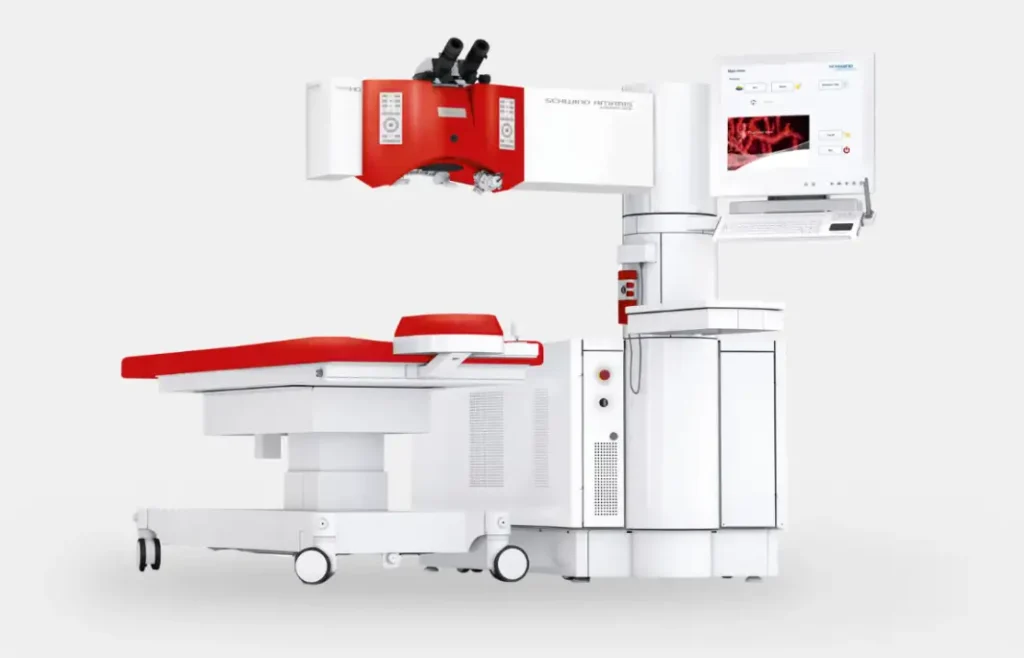
SMILE PRO is the newer version of the ZEISS platform. It uses the ZEISS VISUMAX 800 laser, which incorporates automated assistance for centration and cyclotorsion and uses a high-speed laser system. ZEISS states that the laser exposure for myopic treatment is under 10 seconds, although the overall clinical appointment is much longer than the laser application itself.
For patients researching surgery in Korea, however, the availability of SMILE PRO should not be confused with automatic eligibility. The technology is only one component of refractive surgery.
Who Is a Good Candidate for SMILE?
There is no single prescription number that makes someone universally suitable for SMILE.
A surgeon typically considers several categories of information.
1. Stable Prescription
Your refractive error should be sufficiently stable before elective vision-correction surgery.
For example, the current FDA indication for the VisuMax SMILE procedure specifies patients aged 22 or older with documented stability of manifest refraction over the preceding year. The FDA labeling also specifies particular ranges for myopia and astigmatism.
This illustrates an important point:
Your glasses prescription alone does not determine candidacy.
If your prescription has changed significantly recently, the ophthalmologist may recommend waiting.
2. Healthy Corneal Structure
Corneal anatomy is one of the most important factors in determining whether laser vision correction is appropriate.
The examination may assess:
- Corneal thickness
- Anterior and posterior corneal shape
- Corneal curvature
- Topography
- Tomography
- Epithelial thickness
- Biomechanical characteristics
- Signs of keratoconus or other ectatic disease
Modern corneal imaging has become increasingly important in refractive surgery. A 2026 review found that advances in topography, tomography, epithelial mapping, and biomechanical assessment are improving detection of higher-risk corneas and helping surgeons personalize treatment planning.
This is why a patient should be cautious about any clinic or website that determines candidacy solely from an online prescription.
3. Adequate Corneal Thickness and Tissue Safety
Laser vision correction removes or reshapes corneal tissue.
The surgeon therefore needs to determine whether the planned treatment leaves an appropriate amount of structurally sound cornea.
This calculation can involve:
- Preoperative pachymetry
- Planned lenticule or ablation thickness
- Cap or flap characteristics
- Residual stromal considerations
- Corneal shape
- Overall ectasia risk
Abnormal topography or tomography can indicate increased risk for postoperative corneal ectasia. Current ophthalmic literature emphasizes preoperative corneal imaging as an important component of risk screening.
A thicker cornea does not automatically mean that SMILE is safe, and a thinner cornea does not automatically mean that surgery is impossible. The entire corneal profile matters.
4. Healthy Ocular Surface
Dry eye is another important consideration.
If you already have:
- Burning
- Stinging
- Fluctuating vision
- Foreign-body sensation
- Excessive tearing
- Contact-lens intolerance
- Meibomian gland dysfunction
- Significant tear-film instability
the ophthalmologist may recommend treating the ocular surface before proceeding.
Laser vision correction can temporarily affect corneal nerves and tear-film function. Research comparing SMILE and LASIK generally finds that SMILE has less impact on some objective measures of corneal sensation and tear-film stability, but SMILE does not eliminate postoperative dry eye.
A 2025 systematic review and meta-analysis of 18 studies found better tear-film stability and corneal sensitivity outcomes with keratorefractive lenticule extraction than FS-LASIK on several measures, although individual symptoms and outcomes can vary.
5. Overall Eye Health
A comprehensive evaluation should look beyond the cornea.
The ophthalmologist may consider:
- Glaucoma
- Retinal disease
- Corneal disease
- Ocular inflammation
- Previous eye trauma
- Previous eye surgery
- Significant dry eye
- Other conditions affecting visual quality
Certain conditions may make elective laser surgery inappropriate or require additional treatment before surgery.
The purpose of preoperative testing is therefore not simply to find patients who can have surgery. It is equally important to identify patients who should not have a particular procedure.
What Eye Tests Are Needed Before SMILE?
A comprehensive refractive-surgery examination can involve several diagnostic tests.
| Eye Test | What It Helps Evaluate |
|---|---|
| Visual acuity | Baseline vision |
| Manifest refraction | Exact prescription |
| Corneal topography | Surface curvature and shape |
| Corneal tomography | Three-dimensional corneal structure |
| Pachymetry | Corneal thickness |
| Tear-film assessment | Dry-eye and ocular-surface status |
| Intraocular pressure | Eye pressure |
| Pupil assessment | Pupil size and treatment planning |
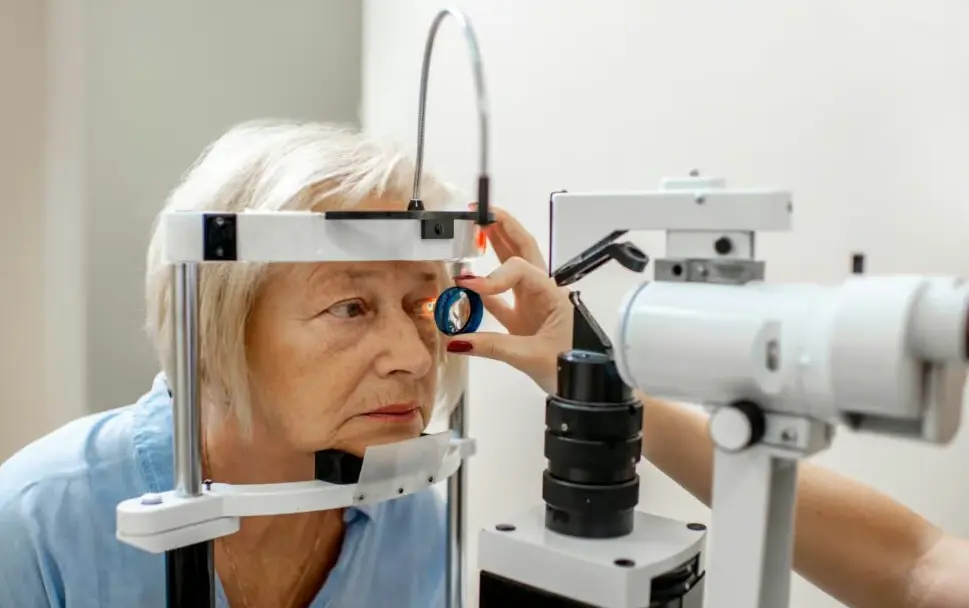
| Slit-lamp examination | Corneal and anterior-eye health |
| Dilated retinal examination | Retinal health |
| Medical history | Conditions and medications affecting surgery |
The exact testing protocol differs between clinics and patients.
Why Corneal Topography Matters
Topography creates a map of the corneal surface.
It can help identify irregular patterns that may not be obvious from a standard glasses prescription.
Why Tomography Matters
Tomography goes further by assessing both anterior and posterior corneal surfaces and corneal thickness distribution.
Modern refractive-surgery screening increasingly uses multimodal imaging to identify subtle abnormalities before treatment. The 2026 literature emphasizes that tomography, epithelial mapping, and related technologies can improve identification of eyes at increased risk.
Contact Lenses: What Should You Do Before the Examination?
Contact lenses can alter corneal measurements, so patients are often asked to stop wearing them before diagnostic testing.
The exact discontinuation period depends on the lens type and the clinic’s protocol.
Korea Eye Clinic currently publishes different pre-examination periods for different lens categories, including soft, toric, hard, and orthokeratology lenses.
If you are traveling internationally, this is particularly important.
For example, arriving in Seoul on Monday and scheduling a Tuesday examination may not work if you have been wearing a type of contact lens that requires a longer discontinuation period.
Always confirm the clinic’s current instructions before booking your flight.
What Happens During a SMILE Consultation in Korea?
For an international patient, the process generally involves four stages.
Stage 1: Pre-Arrival Planning
Before traveling, provide the clinic with:
- Age
- Current prescription
- Astigmatism
- Contact-lens type
- Previous eye surgery
- Eye conditions
- Medication information
- Previous examination records
This can help the clinic prepare for your appointment, but it is not a substitute for an in-person examination.
Stage 2: Comprehensive Examination
Diagnostic testing determines whether your eyes meet the relevant criteria.
Stage 3: Ophthalmologist Consultation
The surgeon reviews your results and discusses:
- SMILE
- LASIK
- LASEK
- ICL or other alternatives when appropriate
- Expected visual benefits
- Risks
- Recovery
- Costs
- Follow-up
Stage 4: Informed Consent
You should understand both the potential benefits and limitations before agreeing to surgery.
A high-quality consultation should not simply confirm the procedure you requested. If another option is clinically more appropriate, that should be explained.
SMILE vs LASIK: Is SMILE Better?
There is no universal winner.
Recent evidence suggests that SMILE and femtosecond LASIK can provide similarly strong visual outcomes for appropriate patients, while their recovery profiles and side-effect patterns differ. A 2025 review found comparable visual outcomes overall, with SMILE potentially offering advantages related to dry eye and the absence of a flap, while LASIK may provide faster visual recovery in some patients.
SMILE may have advantages such as:
- No conventional corneal flap
- Small corneal incision
- Less disruption of some corneal nerves
- Potentially less postoperative ocular-surface disturbance
LASIK may have advantages such as:
- Very rapid visual recovery
- Extensive clinical history
- Availability of customized wavefront- or topography-guided approaches in appropriate cases
The correct procedure depends on your individual anatomy and visual needs—not simply which procedure has the newest technology.
What Is SMILE PRO?
SMILE PRO is the newer generation of the ZEISS SMILE platform, performed on the VISUMAX 800 system.
Compared with the earlier VisuMax platform, SMILE PRO incorporates features designed to assist with centration, cyclotorsion, and faster laser delivery. ZEISS reports laser exposure of less than 10 seconds for myopic corrections on its platform.
However, faster laser application does not mean faster biological healing.
Patients should distinguish between:
Laser time → Procedure time → Functional visual recovery → Long-term stabilization
These are four different concepts.
A very short laser treatment does not mean the eyes have completely healed immediately afterward.
What Is Recovery Like After SMILE?
Many patients experience useful visual improvement relatively quickly after SMILE, but recovery is individual.
Early symptoms can include:
- Blurred vision
- Fluctuating vision
- Dryness
- Light sensitivity
- Mild irritation
- Glare
- Halos
Visual quality can continue changing during the healing period.
For international patients, this distinction is important because being able to see reasonably well the next day does not necessarily mean that every aspect of recovery is complete.
Korea Eye Clinic describes SMILE as having relatively fast recovery, while also providing postoperative instructions and follow-up as part of its vision-correction process.
What Are the Risks of SMILE?
SMILE is an established refractive procedure, but no eye surgery is risk-free.
Potential complications can be divided into several categories.
Early or Procedure-Related Complications
These can include:
- Suction loss
- Incision-related complications
- Epithelial defects
- Difficulty removing the lenticule
- Retained lenticule fragments
- Inflammation
Most are uncommon, but appropriate surgical technique and patient selection are important.
Visual Symptoms
Some patients may experience:
- Glare
- Halos
- Starbursts
- Reduced contrast
- Fluctuating vision
- Residual refractive error
These symptoms may improve with healing, but they should be discussed before surgery.
Dry Eye
Dry-eye symptoms can occur after refractive surgery.
Evidence suggests SMILE may have a more favorable ocular-surface profile than LASIK in several objective measures, but patients can still experience dryness after SMILE.
Pre-existing dry eye should therefore be identified before surgery.
Corneal Ectasia
Corneal ectasia is an uncommon but potentially serious complication involving progressive weakening and deformation of the cornea.
Risk assessment before refractive surgery is therefore essential. Abnormal corneal topography or tomography, certain corneal conditions, high refractive error, and other structural factors can increase concern.
This is one of the strongest reasons not to select a refractive procedure based solely on price or promotional claims.
What About High Myopia?
Patients with high myopia often ask whether SMILE is suitable because they want to reduce their dependence on glasses or contact lenses.
The answer requires individualized evaluation.
The FDA’s current VisuMax SMILE labeling specifies particular ranges for myopia and astigmatism.
For patients with very high myopia, the ophthalmologist may also consider whether an alternative procedure such as an implantable collamer lens (ICL) is more appropriate.
Recent ophthalmology literature has reported comparisons between ICL and SMILE in high myopia, emphasizing that the choice can depend on refractive magnitude, corneal characteristics, visual-quality considerations, and other patient factors.
Therefore:
High myopia does not automatically mean SMILE is the best option.
How Long Should You Stay in Korea for SMILE?
For international patients, the medical schedule should normally include:
Examination → Consultation → Surgery → Early postoperative assessment → Travel planning
Korea Eye Clinic currently describes international vision-correction pathways that allow time for comprehensive testing, treatment, and postoperative follow-up.
A practical trip may involve approximately 3–5 days or more, depending on the procedure and recovery.
If your return flight is long-haul, giving yourself additional flexibility can be useful.
Do not book a return flight immediately after surgery without discussing the schedule with your ophthalmologist.
Can You Fly Home After SMILE?
The answer depends on your individual postoperative examination.
International patients should ask:
- When is my first postoperative examination?
- Do I need another examination before flying?
- When can I safely travel?
- What medications or eye drops should I carry?
- What symptoms require urgent care?
- How will follow-up work after returning home?
The CDC advises medical tourists to plan continuity of care and obtain appropriate medical records before returning home. This is particularly important when the treating clinic is in another country.
For an overseas patient, postoperative planning is therefore part of the treatment—not an optional travel detail.
What Should International Patients Bring?
Before traveling to Korea, prepare:
Medical records
- Current glasses prescription
- Previous eye examinations
- Previous surgery records
- Medication list
- Allergy information
- Contact-lens history
Travel information
- Passport
- Clinic appointment information
- Accommodation details
- Insurance information
- Emergency contact information
Ask whether the clinic can provide examination and surgical records in English or another language you can use with your home ophthalmologist.
How to Choose a SMILE Clinic in Korea
For international patients, compare clinics on more than price.
1. Surgeon qualifications
Confirm the ophthalmologist’s qualifications and experience with refractive surgery.
2. Diagnostic testing
Ask what examinations are performed before surgery.
A sophisticated laser is not a substitute for appropriate screening.
3. Treatment alternatives
Ask:
“If I am not suitable for SMILE, what would you recommend instead, and why?”
This is one of the most revealing questions a patient can ask.
4. Complication management
Ask how the clinic handles postoperative complications and what follow-up is included.
5. International communication
Confirm whether English-language or other language assistance is available.
6. Total cost
Ask whether the quoted price includes:
- Diagnostic testing
- Surgeon consultation
- Surgery
- Medications
- Postoperative examinations
- Additional testing
- Follow-up
Questions to Ask Before SMILE LASIK in Korea
Before confirming surgery, ask your ophthalmologist:
- Am I medically suitable for SMILE?
- What do my corneal topography and tomography show?
- Is my prescription stable?
- Do I have dry eye or ocular-surface disease?
- Why is SMILE preferable to LASIK or LASEK for my eyes?
- Would I be better suited to ICL?
- What visual symptoms might I experience at night?
- How long should I stay in Korea?
- When can I fly home?
- What follow-up will I need after returning home?
These questions shift the decision from “Which laser should I buy?” to the much more clinically meaningful question:
“Which vision-correction strategy has the best risk-benefit profile for my eyes?”
SMILE LASIK in Korea: A Practical Decision Framework
A useful way to think about candidacy is:
Prescription → Cornea → Ocular Surface → Eye Health → Lifestyle → Procedure → Follow-up
Prescription
Is your refractive error stable and within the applicable treatment range?
Cornea
Is the corneal structure suitable for reshaping?
Ocular surface
Are dry-eye and tear-film problems controlled?
Eye health
Are there conditions that make elective refractive surgery inappropriate?
Lifestyle
Do your occupation, sports, night-driving requirements, and visual priorities influence procedure choice?
Procedure
Would SMILE, LASIK, LASEK, ICL, or continued glasses/contact lenses provide the most appropriate option?
Follow-up
Can you complete the necessary postoperative monitoring, especially if you are returning to another country?
This framework is much more useful than choosing surgery based on a single advertised benefit.
FAQs
Who is eligible for SMILE LASIK in Korea?
SMILE LASIK eligibility depends on factors such as age, stable refractive error, corneal thickness and shape, and overall eye health. Patients with significant corneal abnormalities, uncontrolled eye conditions, or other risk factors may not be suitable for SMILE LASIK Korea and may need an alternative treatment.
What eye tests are required before SMILE LASIK Korea?
Before SMILE LASIK in Korea, a comprehensive examination may include visual acuity, refraction, corneal topography or tomography, pachymetry, intraocular-pressure measurement, ocular-surface evaluation, slit-lamp examination, and retinal assessment. These tests help determine SMILE LASIK eligibility and identify potential risk factors.
How long does SMILE LASIK recovery take?
SMILE LASIK recovery varies between patients, but many experience useful vision relatively quickly while visual quality and ocular-surface symptoms continue to stabilize. Dryness, fluctuating vision, glare, or halos can occur during recovery. Your ophthalmologist should determine when you can resume activities and travel.
What are the risks of SMILE LASIK in Korea?
Potential SMILE LASIK risks include dry eye, fluctuating vision, glare, halos, residual refractive error, undercorrection or overcorrection, inflammation, infection, and rare corneal complications. Appropriate screening and individualized treatment planning are essential when considering SMILE LASIK Korea.
Is SMILE LASIK better than LASIK or LASEK?
SMILE LASIK in Korea is not automatically better than LASIK or LASEK. Each procedure has different techniques, indications, recovery profiles, and risks. The appropriate option depends on your corneal anatomy, prescription, ocular surface, lifestyle, and overall eye health. A comprehensive examination should guide the final treatment choice.
Final Takeaway: Is SMILE LASIK in Korea Right for You?
SMILE LASIK in Korea can be an appropriate vision-correction option for carefully selected patients, but eligibility must be determined through a comprehensive ophthalmologic examination. The key factors include refractive stability, corneal thickness and shape, ocular-surface health, overall eye health, treatment range, and individual visual needs.
Current evidence indicates that SMILE and femtosecond LASIK can produce comparable visual outcomes in appropriate patients, while SMILE’s flap-free design and smaller incision may offer advantages for certain patients, particularly regarding some measures of corneal nerve preservation and ocular-surface recovery. Nevertheless, SMILE is not risk-free and is not automatically the best choice for everyone.
For patients traveling to Korea, the most important step is therefore not choosing the laser first.
It is choosing a qualified ophthalmologist who can:
- Perform comprehensive diagnostic testing.
- Determine whether your cornea is suitable.
- Assess your ocular surface and eye health.
- Compare SMILE with alternative procedures.
- Explain realistic benefits and risks.
- Provide an appropriate postoperative and international-travel plan.
BSM Eye Care Clinic currently identifies SMILE LASIK as one of its refractive-surgery services and states that it serves both Korean and international patients in Seoul.
For an overseas patient, the safest approach is to book the examination and consultation first, keep your travel schedule flexible, and make the final treatment decision only after your eyes have been evaluated in person.