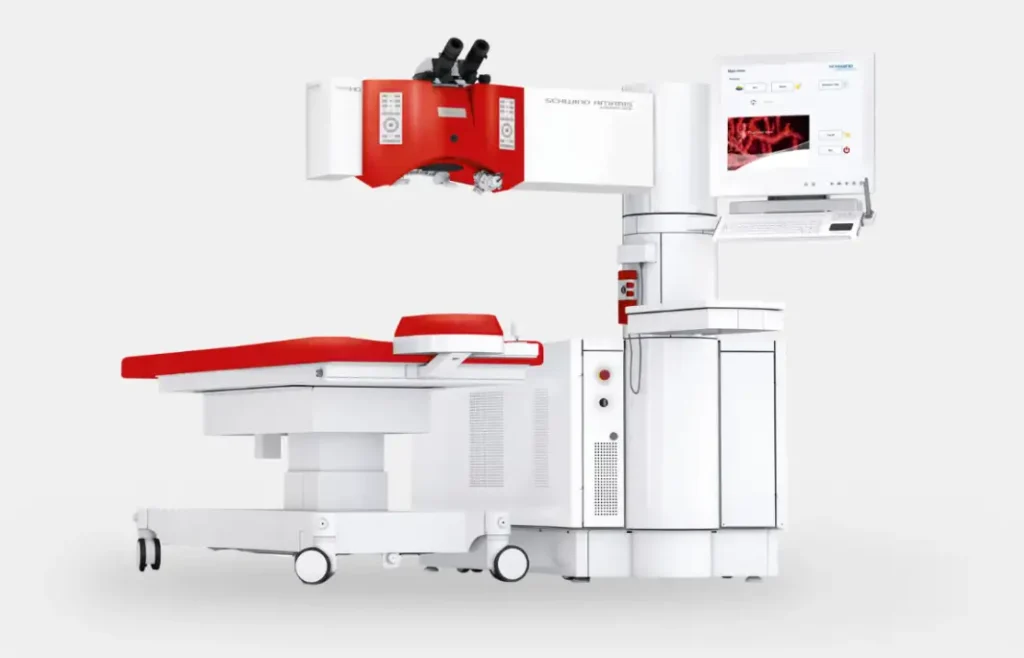

Yes, foreigners can get SMILE LASIK in Korea if they meet the medical criteria determined by a comprehensive eye examination. Eligibility depends on factors such as prescription stability, corneal thickness and shape, eye health, and ocular-surface condition. International patients should also plan consultation, surgery, follow-up, and travel carefully.
koreaeyeclinic.com
Yes, foreign patients can have SMILE LASIK in South Korea, provided they meet the medical eligibility requirements after a comprehensive eye examination. Korea, particularly Seoul’s Gangnam medical district, has established ophthalmology clinics that treat international patients and provide vision-correction procedures such as SMILE, LASIK, LASEK, and ICL. However, being a foreign visitor does not automatically make someone a candidate. The most important step is a detailed preoperative examination to determine whether SMILE is appropriate for your corneal shape, thickness, prescription, ocular surface, and overall eye health.
For international patients, choosing SMILE in Korea involves more than selecting a laser procedure. You also need to consider how to arrange the examination, how long to stay in Seoul, whether your prescription is stable, what happens if you are not a candidate, when postoperative checks should occur, and how follow-up care will be managed after returning home.
Table of Contents

What Is SMILE LASIK?
SMILE stands for Small Incision Lenticule Extraction. Unlike conventional LASIK, which creates a corneal flap, SMILE uses a femtosecond laser to create a small lenticule inside the cornea. The surgeon then removes the lenticule through a small incision, changing the corneal shape and correcting refractive error.
The technique is considered a flap-free form of laser vision correction. The incision is typically only a few millimeters rather than the much larger flap created during LASIK.
SMILE was first introduced as a refractive procedure for myopia and later expanded to include myopic astigmatism. In the United States, FDA authorization covers specific ranges of myopia and myopic astigmatism, with eligibility depending on the device indication and patient characteristics.
Importantly, FDA labeling should not be confused with worldwide medical practice. Different countries may authorize technologies for different indications. Therefore, an international patient should ask the Korean clinic exactly which SMILE system is being used and which corrections it is intended to treat.
Can Foreigners Get SMILE LASIK in Korea?
Yes. International patients can inquire about and undergo vision-correction surgery in Korea if they satisfy the clinic’s medical criteria.
Korea Eye Clinic’s current English-language information identifies its practice as BSM Eye Clinic and states that international patients are welcome. The clinic provides appointment assistance through online booking, telephone, WhatsApp, and KakaoTalk, and says that international coordinators can assist in English and other languages.
The clinic is located in Gangnam, Seoul, with facilities listed at the Cambridge Building on Teheran-ro. Its published services include SMILE LASIK, Smart SMILE LASIK, LASEK, ICL, cataract surgery, and other ophthalmic care.
However, international availability is not the same as surgical eligibility.
A patient may travel to Seoul intending to receive SMILE but discover after examination that LASIK, LASEK, ICL, or no refractive surgery is more appropriate. A responsible medical tourism plan should allow for this possibility rather than assuming that surgery will automatically take place.
Who May Be a Candidate for SMILE?
The exact criteria depend on the surgeon, diagnostic findings, laser platform, and applicable regulatory indications. In general, an ophthalmologist evaluates several factors before recommending SMILE.
1. Stable refractive prescription
Your myopia or astigmatism should generally be stable before elective refractive surgery.
For example, FDA documentation for an approved SMILE indication requires documented stability of manifest refraction over the preceding year.
If your prescription has changed substantially within the past year, the surgeon may recommend waiting.
2. Adequate corneal structure
The surgeon will examine:
- Corneal thickness
- Corneal curvature
- Corneal topography or tomography
- Corneal shape
- Residual stromal tissue considerations
- Signs of corneal ectasia or keratoconus
This is one reason an online prescription alone cannot determine whether you are suitable for SMILE.
3. Healthy ocular surface
Dry eye symptoms matter because refractive surgery can temporarily affect the ocular surface.
Recent American Academy of Ophthalmology EyeWiki guidance emphasizes the importance of identifying and optimizing ocular-surface problems before refractive surgery.
If you have significant dry eye, blepharitis, meibomian gland dysfunction, or another ocular-surface problem, treatment may be recommended before surgery.
4. No active eye disease
The examination may identify conditions that make elective refractive surgery inappropriate or require additional management first.
Examples can include:
- Significant corneal disease
- Uncontrolled glaucoma
- Active ocular inflammation
- Significant retinal problems
- Certain corneal irregularities
- Severe ocular-surface disease
The FDA’s patient information for SMILE specifically emphasizes healthy eyes and the absence of relevant eye disease as part of candidate selection.
5. Appropriate refractive range
SMILE is not a single universal treatment range.
For example, current FDA documentation for the VisuMax system includes specific ranges for myopia and astigmatism and specifies age and refractive-stability requirements.
Therefore, someone with very high myopia should not assume that SMILE is automatically the best solution. Depending on the examination, another refractive procedure such as ICL may be considered.
What Tests Are Needed Before SMILE in Korea?
For an international patient, the most important appointment is usually the preoperative eye examination.
A comprehensive assessment may evaluate:
| Examination | Why it matters |
|---|---|
| Visual acuity | Measures current vision |
| Manifest refraction | Determines prescription |
| Corneal thickness | Helps assess surgical suitability |
| Corneal topography/tomography | Evaluates corneal shape |
| Intraocular pressure | Screens for pressure abnormalities |
| Tear-film/ocular-surface assessment | Evaluates dry-eye risk |
| Pupil assessment | Helps with treatment planning |
| Retinal examination | Checks overall ocular health |
| Medical and eye history | Identifies risk factors |
The precise test list varies between clinics and patients.
This is particularly important for people traveling from abroad because an old eye examination from your home country does not necessarily replace an examination in Korea.
Your previous records can be useful, but the Korean ophthalmologist may need current measurements before deciding whether surgery is appropriate.
What Happens During a SMILE Consultation in Korea?
For an international patient, the process typically follows several stages.
Step 1: Contact the Clinic Before Traveling
Start by providing basic information such as:
- Age
- Current prescription
- Astigmatism
- Previous eye surgery
- Contact lens use
- Dry-eye symptoms
- Existing eye conditions
- Current medications
- Previous eye examination results
This preliminary information can help the clinic determine how to arrange your appointment, but it should not be considered a final surgical approval.
Korea Eye Clinic currently states that international patients can make appointments through its booking channels and recommends arranging surgery-related visits in advance.
Step 2: Comprehensive Eye Examination
Once you arrive in Seoul, diagnostic testing determines whether you are medically suitable.
This is the point at which your treatment plan should become individualized.
Step 3: Ophthalmologist Consultation
The ophthalmologist reviews your results and discusses:
- Whether you qualify for SMILE
- Why SMILE may or may not be appropriate
- Alternative procedures
- Expected visual outcome
- Possible side effects
- Recovery
- Follow-up requirements
- Travel considerations
A good consultation should not simply confirm the procedure you requested.
If SMILE is unsuitable, the correct medical decision may be to recommend another procedure—or no surgery.
Step 4: Informed Consent
Before surgery, you should understand the benefits, limitations, alternatives, and potential complications.
The U.S. FDA emphasizes that refractive surgery carries risks and that patients should make decisions based on their own risk tolerance rather than relying solely on other people’s experiences or promotional claims.
How Long Should a Foreigner Stay in Korea for SMILE?
There is no universal number of days that applies to every international patient.
Korea Eye Clinic currently describes an international-patient sequence that may involve consultation and examination, surgery, and postoperative examination over several days. Its published vision-correction guidance gives an example of:
Day 1: Consultation and comprehensive examination
Day 2: Surgery
Day 3–5: Follow-up examination
The clinic also emphasizes that the appropriate schedule varies by procedure and individual recovery.
For this reason, avoid booking a return flight immediately after surgery.
A more sensible planning sequence is:
Arrival → Eye examination → Eligibility decision → Surgery → Postoperative examination → Return home
This approach is particularly important because the examination could reveal that SMILE is not appropriate.
The CDC also advises medical tourists to plan for follow-up care and obtain copies of medical records before returning home.
Can You Have the Examination and Surgery on the Same Trip?
Yes, this can be possible, but the timing depends on the clinic’s schedule and your examination results.
International patients should not book a non-refundable trip on the assumption that surgery is guaranteed.
There are several reasons:
- Your corneal measurements may not meet eligibility criteria.
- Your prescription may be unstable.
- You may have untreated dry eye.
- The surgeon may recommend another procedure.
- Additional testing may be necessary.
- The clinic may determine that surgery should be postponed.
A medically responsible clinic should be willing to recommend against surgery when the risk-benefit profile is unfavorable.
This is one of the most important differences between medical consultation and medical tourism marketing.
What Are the Benefits of SMILE Compared With LASIK?
SMILE and LASIK are both established forms of laser refractive surgery, but they use different surgical techniques.
The major structural difference is that SMILE does not require creation of a conventional LASIK flap.
Because SMILE uses a small incision, research has investigated whether it produces less disruption to corneal nerves and the ocular surface than LASIK. AAO educational material notes potential advantages related to postoperative dry-eye effects and corneal nerve recovery, while also emphasizing that no single refractive procedure is best for every patient.
That does not mean SMILE eliminates dry eye or other complications.
Patients can still experience:
- Temporary dry eye
- Fluctuating vision
- Glare
- Halos
- Residual refractive error
- Undercorrection or overcorrection
- Infection, although uncommon
- Need for additional treatment in selected cases
Korea Eye Clinic’s own published SMILE information also lists dry eye, fluctuating vision, glare, halos, undercorrection/overcorrection, and rare infection among potential complications.
What Is Recovery Like After SMILE?
Recovery varies between individuals.
Some patients experience useful vision relatively quickly, but rapid visual improvement does not mean the eyes have completely healed.
Early after surgery, patients may experience:
- Blurred or fluctuating vision
- Dryness
- Light sensitivity
- Mild discomfort
- Glare or halos
- A foreign-body sensation
Korea Eye Clinic’s published postoperative guidance recommends avoiding eye rubbing, using prescribed or recommended eye drops as instructed, and following specific hygiene restrictions during the early recovery period.
Your surgeon’s instructions should take priority over a generic recovery timeline.
Can You Fly Home After SMILE in Korea?
International patients should discuss their return flight with their ophthalmologist before purchasing a fixed travel schedule.
The issue is not simply whether cabin pressure itself will damage the cornea. The more important consideration is whether your eyes have been appropriately examined after surgery and whether you can access medical care if a complication develops.
The CDC’s medical-tourism guidance recommends planning postoperative care, understanding the possibility of complications after returning home, and arranging continuity of care before traveling abroad for medical treatment.
If you are traveling internationally after SMILE, ask the clinic:
- When can I safely fly?
- When is my first postoperative examination?
- Do I need another examination before departure?
- What medications or eye drops should I carry?
- What symptoms require urgent attention?
- Who should I contact after returning home?
- Can you provide my medical records in English?
Do not treat a generic online “fly after X days” rule as a substitute for your surgeon’s postoperative assessment.
What Should International Patients Bring to Korea?
Before traveling, prepare:
Medical information
Bring:
- Current glasses prescription
- Contact lens prescription if available
- Previous eye examination reports
- Previous surgical records
- List of medications
- Information about allergies
- Details of previous eye conditions
Travel information
Also keep:
- Passport
- Travel insurance information
- Clinic contact details
- Accommodation address
- Emergency contact information
- Postoperative appointment schedule
The CDC specifically recommends that medical tourists obtain copies of their medical records and share relevant information with healthcare professionals who provide follow-up care after returning home.
What If You Wear Contact Lenses?
Contact lenses can temporarily alter the shape of the cornea, which may affect measurements used for surgical planning.
For that reason, clinics commonly require patients to stop wearing certain types of contact lenses before examinations.
Korea Eye Clinic’s current SMILE guidance lists different discontinuation periods depending on lens type, including approximately 3 days for soft lenses, 6 days for toric lenses, 9 days for hard lenses, and 1 month for Ortho-K lenses.
Because individual instructions can vary, confirm the exact contact-lens restriction with the clinic before your appointment.
This is especially important for international visitors who may have only one opportunity to complete the examination during a short trip.
How Much Does SMILE LASIK Cost in Korea for Foreigners?
The cost depends on the procedure, technology, clinic, surgeon, examination findings, and what is included in the treatment package.
A published price should therefore be treated as a starting point rather than a guarantee of your final treatment cost.
Korea Eye Clinic’s current information explains that pricing can vary according to the procedure and individual treatment plan, and that an examination may be required before a final quote is provided.
When comparing clinics, ask whether the quoted price includes:
- Preoperative examination
- Surgeon consultation
- SMILE procedure
- Medication
- Postoperative examinations
- Follow-up visits
- Additional diagnostic tests
- Enhancement evaluation if needed
The cheapest advertised price is not necessarily the lowest total cost if essential examinations or follow-up care are excluded.
How Should Foreigners Choose a Korean Eye Clinic?
For international patients, price should be only one part of the decision.
Use this checklist:
1. Verify the ophthalmologist
Check the surgeon’s qualifications, ophthalmology training, experience with refractive surgery, and professional memberships.
2. Look at diagnostic testing
A modern laser is only one part of refractive surgery. Accurate patient selection and diagnostic evaluation are equally important.
3. Ask about alternatives
If you are not suitable for SMILE, what does the ophthalmologist recommend instead?
A credible consultation should explain alternatives rather than treating one procedure as appropriate for everyone.
4. Understand complications
Ask specifically about dry eye, glare, halos, residual prescription, enhancement, infection, and other relevant risks.
5. Confirm international support
Ask whether the clinic can communicate in your preferred language and whether medical documents can be provided for your home-country doctor.
6. Plan postoperative care
Find out how many examinations are recommended before you return home and what happens if you develop a problem after leaving Korea.
7. Avoid making the trip too tight
Medical tourism requires flexibility. Your eyes—not your sightseeing itinerary—should determine the timing of surgery and follow-up.
Questions to Ask Before Booking SMILE in Korea
Before paying for surgery, ask:
- Am I a suitable candidate for SMILE?
- What did my corneal topography and thickness measurements show?
- Is my prescription stable enough for surgery?
- Why do you recommend SMILE rather than LASIK, LASEK, or ICL?
- What are my individual risk factors for dry eye?
- What visual symptoms could occur at night?
- How many postoperative examinations do I need?
- How long should I remain in Seoul?
- When can I safely fly home?
- What happens if I develop a problem after returning home?
- Will I receive my examination and surgical records in English?
- What is included in the quoted price?
These questions help transform a medical-tourism decision from a price comparison into a clinical decision.
A Practical Seoul SMILE LASIK Timeline for Foreign Patients
A realistic example might look like this:
| Stage | Typical activity |
|---|---|
| Before departure | Online inquiry and appointment |
| Before examination | Stop contact lenses according to clinic instructions |
| Day 1 | Comprehensive eye examination and consultation |
| Day 1–2 | Eligibility and treatment decision |
| Surgery day | SMILE procedure and postoperative instructions |
| Following days | Follow-up examination |
| Before departure | Surgeon confirms recovery status and travel instructions |
| After returning home | Follow postoperative instructions and arrange local care if necessary |
This is an example planning framework, not a universal medical schedule. Your ophthalmologist may recommend a different timeline based on your eyes and recovery.
Is SMILE LASIK in Korea Safe for Foreign Patients?
Being a foreigner does not inherently make SMILE more or less medically appropriate. The relevant questions are whether you are a suitable candidate, whether the procedure is performed by a qualified ophthalmologist in an appropriate clinical setting, whether informed consent is obtained, and whether you have adequate postoperative care.
All refractive surgery carries potential risks. The FDA warns that complications can include visual symptoms such as glare, halos, double vision, reduced quality of vision, and in some cases loss of visual acuity.
For international patients, there is an additional consideration: continuity of care.
The CDC recommends researching the facility and healthcare professional, understanding what follow-up services are included, obtaining medical records, and arranging appropriate care after returning home.
Therefore, “safe” should never mean “risk-free.”
A better question is:
Is this clinic providing appropriate screening, informed consent, qualified surgical care, and a realistic postoperative plan for an international patient?
Why Seoul Can Be Attractive for International SMILE Patients
Seoul is a major medical center with established ophthalmology services and a substantial international-patient infrastructure.
BSM Eye Clinic states that it has provided ophthalmic care in Korea for more than 20 years and treats both Korean and international visitors. Its published services include refractive surgery, cataract surgery, glaucoma care, retina care, SMILE, LASEK, and ICL.
The clinic also identifies its Gangnam location and international appointment support, including English and other language assistance.
For an overseas patient, these logistical factors can be useful—but they should complement, not replace, careful medical evaluation.
FAQs
Can foreigners get SMILE LASIK in Korea?
Yes, SMILE LASIK Korea for foreigners is available to international patients who meet the medical eligibility criteria. A comprehensive eye examination is required to assess your prescription, corneal structure, eye health, and suitability before surgery.
How do I qualify for SMILE LASIK in Korea?
Eligibility for SMILE LASIK in Korea depends on factors including prescription stability, corneal thickness and shape, ocular health, and dry-eye condition. A qualified ophthalmologist must review your examination results before confirming whether SMILE is appropriate.
How long should foreigners stay in Korea for SMILE LASIK?
The required stay for SMILE LASIK Korea for foreigners varies according to your examination, procedure, recovery, and follow-up schedule. International patients should allow enough time for the initial eye examination, surgery if appropriate, and at least one postoperative assessment before traveling home.
Is SMILE Pro available for international patients in Seoul?
SMILE Pro Seoul may be an option for eligible international patients, depending on the clinic, technology available, and your individual eye condition. The latest SMILE technology is not automatically suitable for every patient, so an ophthalmologist should determine the appropriate procedure after examination.
Can I fly home after SMILE LASIK in Korea?
Patients considering SMILE LASIK in Korea should discuss their return flight with their ophthalmologist. The appropriate travel timing depends on postoperative recovery and examination results. International patients should schedule follow-up care and obtain clear instructions before returning home.
Final Answer: Can You Get SMILE LASIK in Korea as a Foreigner?
Yes. Foreign patients can undergo SMILE LASIK in Korea if they meet the medical criteria determined through a comprehensive ophthalmologic examination. The process generally involves pre-travel appointment planning, arrival in Seoul, detailed eye testing, an ophthalmologist consultation, eligibility assessment, surgery if appropriate, postoperative examination, and follow-up planning.
The most important point is that you should not choose SMILE simply because you are traveling to Korea for laser eye surgery. Your corneal anatomy, prescription, ocular-surface health, eye history, and overall risk profile determine whether SMILE is appropriate. In some cases, LASIK, LASEK, ICL, or continued glasses/contact lenses may be a better option.
For international patients, the best preparation is to leave enough flexibility in your itinerary, bring previous eye records, follow contact-lens restrictions before examination, understand the full treatment cost, schedule postoperative care, and obtain your medical records before returning home.
If you are considering SMILE in Seoul, the most useful first step is therefore not booking the surgery itself—it is booking a comprehensive eye examination and consultation with a qualified ophthalmologist who can explain whether SMILE is appropriate for your individual eyes.